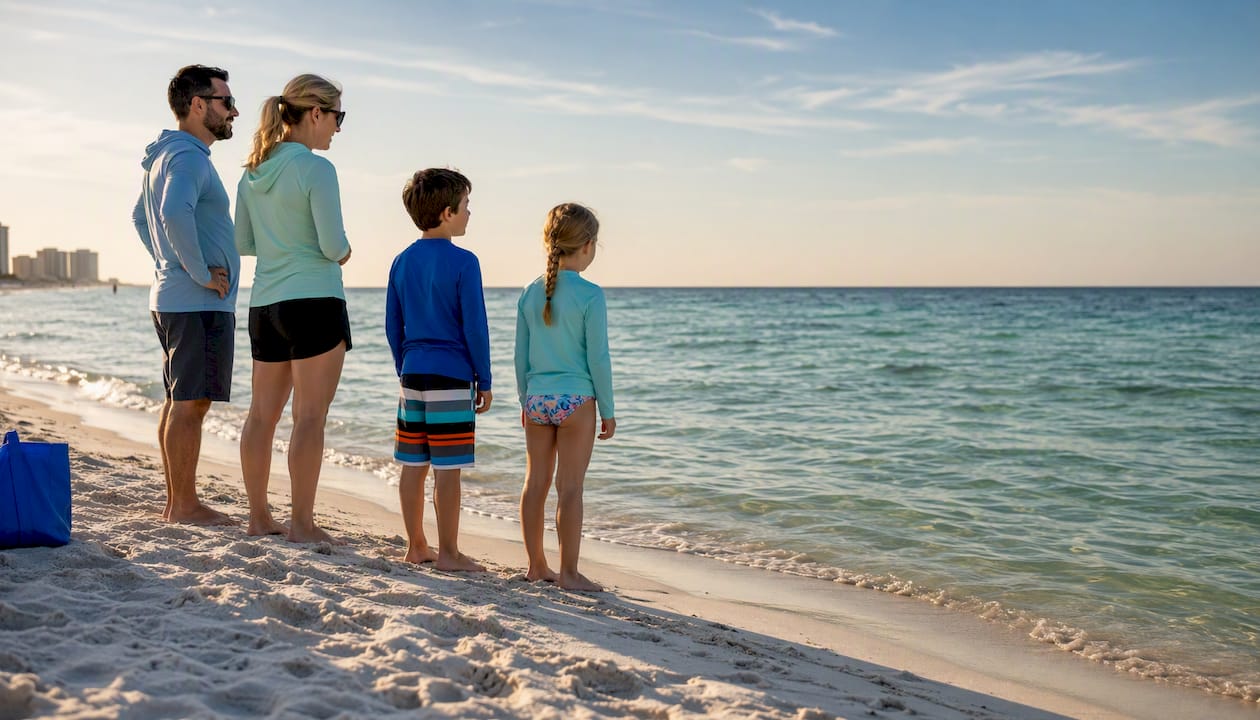
Jellyfish live in the Gulf near Panama City Beach all year, so there is no single “jellyfish season PCB” travelers can circle on a calendar. Winds and currents push them close to shore at unpredictable times, though sightings often climb in late summer and early fall. Your best move on any given day is simple: check the beach flags, stay near lifeguards, and pack a rash guard just in case.
TL;DR:
- Jellyfish presence depends on wind and current patterns, not specific months, but sightings tend to increase from August to October.
- Checking the purple flag and consulting with lifeguards daily are the most reliable ways to avoid encounters, regardless of the season.
- Wearing a rash guard and never touching washed-up jellyfish significantly reduces the risk of stings during any beach visit.
- Most stings are manageable with seawater rinsing and tentacle removal, but severe reactions require immediate medical help.
- Booking a vacation rental with a private pool offers a safe alternative when jellyfish activity spikes or flags are raised.
Table of Contents
- Is There a Jellyfish Season PCB Visitors Should Plan Around?
- How to Avoid Jellyfish PCB: Prevention Tips That Actually Work
- Jellyfish Stings in PCB: First Aid Steps and When to Call for Help
- Planning Your Michigan Family’s Trip Around Jellyfish Risk
- Why This Guidance Is Worth Trusting
- The Real Lesson Behind Jellyfish Season Hype
- A Smarter Way to Jellyfish-Proof Your PCB Trip
- Sources
- FAQ
Is There a Jellyfish Season PCB Visitors Should Plan Around?
Jellyfish don’t follow a school-bell schedule. What actually moves them toward the sugar-white sand is wind direction, nearshore currents, and warm-water patches that drift through the Gulf. Local reporting on jellyfish in the Gulf points to currents and wind patterns as the real driver, not a fixed date on the calendar, which is why one week can look completely clear and the next can bring a cluster of sightings right at the shoreline.
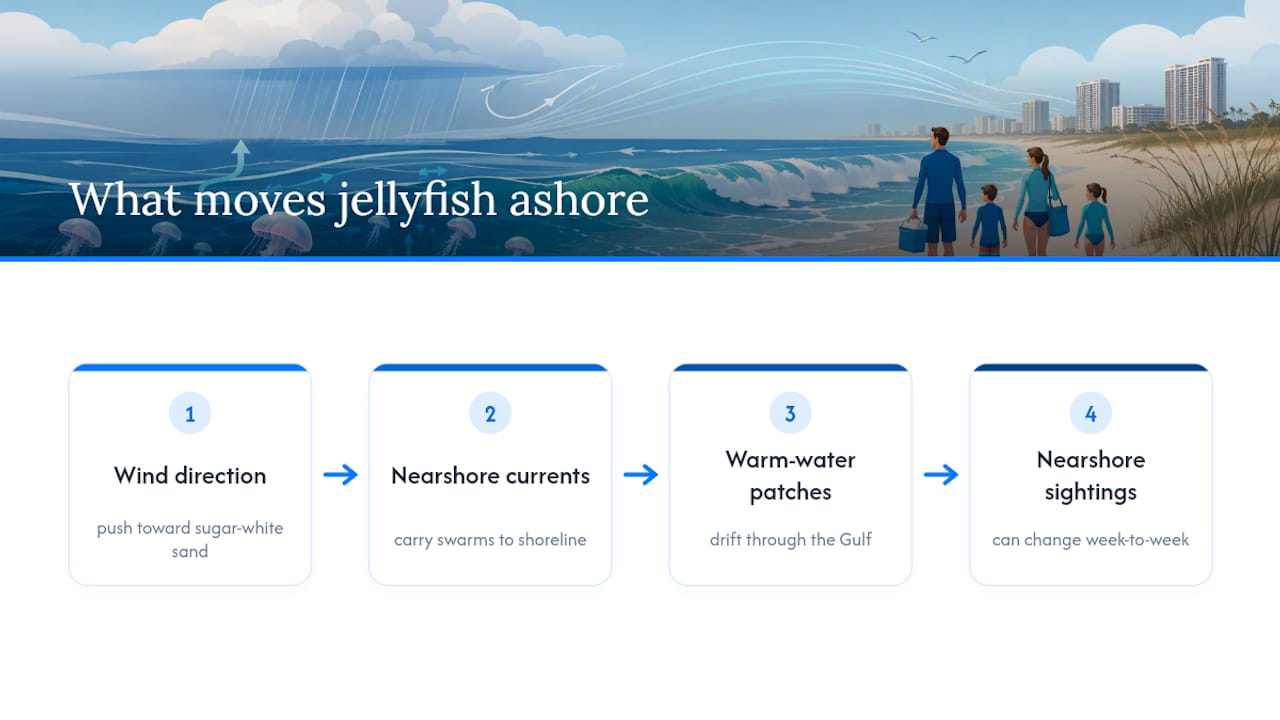
That said, patterns do exist. Coverage from UF/IFAS Extension and other Florida outlets notes that late summer into early fall, roughly August through October, tends to bring more reports along the Panhandle. Some news coverage narrows that further, pointing to September and October as the months when numbers commonly peak before cooler water pushes jellyfish activity back down.
Treat those months as a heads-up, not a lockout. Jellyfish can show up in June or clear out completely by the second week of September if the wind shifts. They’re also episodic: a swarm that shows up on a Tuesday can be gone by Thursday once currents change again. If you’re weighing dates against the water temperature at Panama City Beach, remember that cooler water later in fall typically correlates with fewer jellyfish, but “typically” is doing a lot of work in that sentence. There is no month that guarantees a jellyfish-free swim, so your day-of plan matters more than your booking date.
How to Avoid Jellyfish PCB: Prevention Tips That Actually Work
The single best tool you have on any beach day is the flag flying at the lifeguard stand. Bay County and Panama City Beach fly a purple flag specifically to warn of dangerous marine life, jellyfish included, and lifeguards are trained to answer questions about what’s in the water that day, according to local reporting on the purple-flag system. Reading the flags takes ten seconds and beats guessing every time.
Beyond the flags, a few habits cut your odds of a sting significantly:
- Check the flag color before you even unpack your beach bag, and ask a lifeguard if you’re unsure what it means for the day.
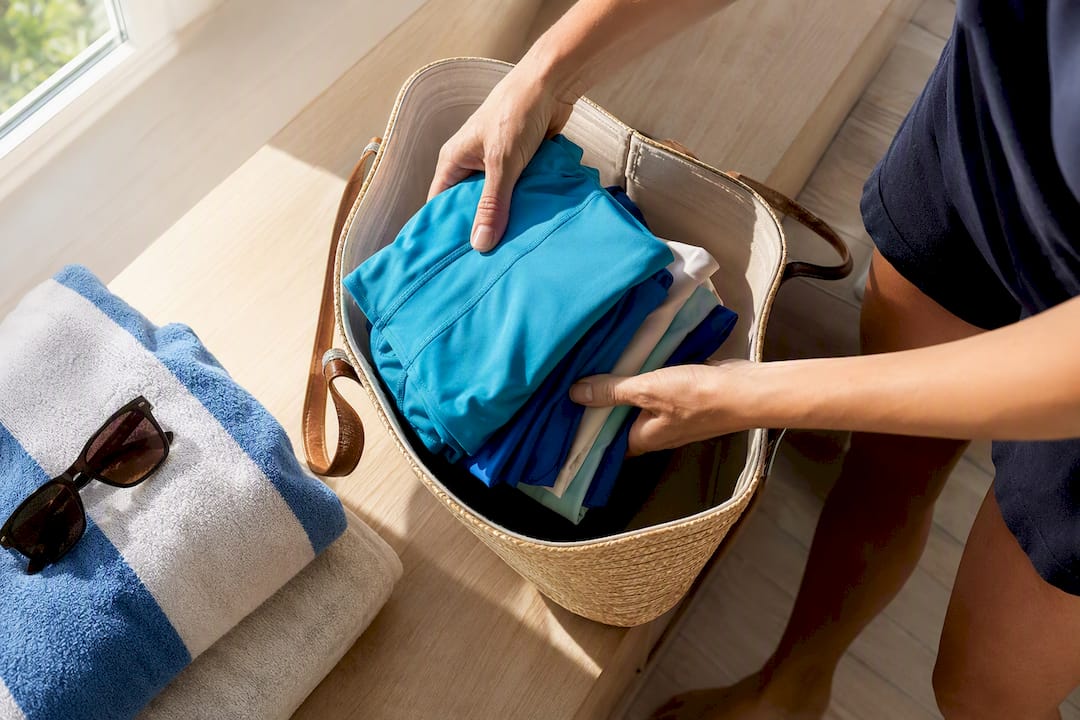
- Wear a long-sleeve rash guard, dive skin, or thin wetsuit. Physical barriers block tentacle contact, which UF/IFAS Extension calls one of the most reliable forms of protection.
- Never touch a jellyfish washed up on the sand, even a dead one. Nematocysts can still fire.
- Swim within sight of lifeguards, not on an empty stretch of beach, so help is close if something goes wrong.
- Rinse gear and shower after swimming, especially if you noticed any jellyfish nearby.
If you’re outfitting the family for a first Gulf trip, a quick read on water sports gear and safety basics is a useful primer before you shop for rash guards or fins.
Pro Tip: Pack one rash guard per swimmer even if the forecast looks calm. It’s cheap insurance, and it works just as well for sunburn as it does for jellyfish.
Jellyfish Stings in PCB: First Aid Steps and When to Call for Help
Most jellyfish stings at Panama City Beach are painful but manageable with basic first aid. A few, especially in people with allergies, escalate fast and need a hospital, not a beach towel.
- Get out of the water and away from the area where you were stung.
- Rinse the site with seawater, not fresh water. Fresh water can trigger remaining stinging cells to fire again.
- Remove any visible tentacles using a gloved hand, a stick, or tweezers rather than bare fingers.
- Watch for symptoms over the next hour and note anything that seems to be worsening rather than settling.
Mild reactions look like red blistering, a rash, throbbing pain, or itching, and they can linger for a few hours according to Florida Department of Health guidance. Severe reactions are a different story entirely: difficulty breathing, chest pain, dizziness, or vomiting are signs of a systemic reaction that needs immediate professional attention.
If you or anyone in your group shows severe symptoms, call 911 or the Florida Poison Information Center at 1-800-222-1222 right away. That number is staffed around the clock and can walk you through next steps even before help arrives.
One more wrinkle worth knowing: not everything that stings in these waters is a textbook jellyfish. Florida Poison Control notes that some stinging organisms found on Panhandle beaches technically fall outside that category, but they can still cause a real reaction, so the same first-aid steps apply regardless of what stung you.
Planning Your Michigan Family’s Trip Around Jellyfish Risk
If your crew is flying or driving down from Michigan, a little scheduling awareness helps, even though nothing guarantees a jellyfish-free week. Late spring and early summer historically see fewer reports than the August through October stretch, so if your dates are flexible, that window is worth considering. Just don’t build your whole trip around it. Jellyfish can turn up in June, and a calm October is entirely possible too.
Pack smart instead of betting everything on timing:
- Rash guards or swim shirts for every swimmer, kids included
- A small first-aid kit with vinegar or a sting-relief spray, plus tweezers
- The Florida Poison Information Center number saved in your phone: 1-800-222-1222
- A waterproof phone case so you can check conditions from the water’s edge
- Reef-safe sunscreen, since it’s kinder to the Gulf ecosystem and to sensitive skin
If you’re traveling with young kids or anyone who gets anxious about ocean swimming, book a rental with a private or heated pool as your fallback. It turns “the flags are purple today” from a vacation crisis into a minor scheduling adjustment. Review Panama City Beach safety basics before you leave home so nobody in your group is caught off guard by flag colors or beach etiquette on day one.
Why This Guidance Is Worth Trusting
Panama City Beach stretches more than 27 miles along Florida’s Gulf Coast, and that scale means conditions can differ noticeably from one public beach access to another on the same afternoon. Local lifeguards post flag colors daily, and county officials rely on that purple-flag system specifically because Gulf marine life doesn’t respect a printed calendar.
This guide draws on reporting from UF/IFAS Extension, Florida Department of Health guidance, and Florida Poison Control, the three sources beachgoers and emergency responders already lean on for accurate, current information. For ongoing updates as your travel dates approach, our beach flag guide and water temperature guide track seasonal patterns. Still, nothing replaces asking a lifeguard directly when you arrive. Conditions change by the tide, and the person standing on the sand that morning knows more than any article written weeks in advance.
The Real Lesson Behind Jellyfish Season Hype
Most articles on this topic oversell the idea of a clean jellyfish “season,” as if October is dangerous and June is safe. The research doesn’t support that clean split. What it supports is a probability shift: more reports late summer into fall, fewer in late spring, and exceptions in both directions every single year.
Where conventional advice falls short is treating timing as the whole solution. Timing lowers your odds a little. It doesn’t replace the purple flag, and it definitely doesn’t replace a rash guard on your kid before they run into the surf. The travelers who have the smoothest trips are the ones who stop trying to outsmart the calendar and instead build a same-day habit: check the flag, ask the lifeguard, then decide how deep to wade.
If you take one thing from this guide, make it that habit rather than a date range. Pair it with a rental that gives you a pool as backup, and jellyfish stop being a trip-ruining variable and become just another beach-day detail you’re prepared for.
— Joe
A Smarter Way to Jellyfish-Proof Your PCB Trip
Vacation rentals in the area often offer amenities like a private pool right outside the door, an option not typically available to hotel guests. Using a vacation rental marketplace is an alternative to relying solely on daily flag colors when planning beach activities. When the purple flag goes up or reports of jellyfish activity pick up nearby, you’re not stuck rearranging your entire day. Guests may choose to swim in a private pool instead.
Search vacation rental listings by amenities, location, and size to find accommodations that fit your family’s preferences for beach proximity and swimming options. Some travelers prioritize properties with heated pools, while others seek beachfront proximity for easy access to lifeguarded areas. Either way, you book directly with property owners with no guesswork about what you’re getting. Browse Panama City Beach vacation rentals now and lock in a property that fits your family’s comfort level before your travel dates fill up.
This article is general information, not a substitute for advice from a qualified doctor. Consult a qualified healthcare professional about your own circumstances before acting on anything here.
Sources
- Quality
- Jellyfish sightings prompt vigilance along Florida Panhandle (UF/IFAS Extension)
- Florida Poison Control Center: ‘It’s technically not a jellyfish but it can sting you — it’s here in Panama City Beach’
Recommended
- Panama City Beach Safety: What Illinois Travelers Should Know
- 4–6 Hour Drive: Kayak Panama City Beach from Mississippi

About the Author
Joe Godar of the PanamaCityBeachFlorida.com Editorial Team creates destination guides, vacation-planning resources, and local travel content focused on Panama City Beach, Florida.
Our team researches local beaches, vacation rental trends, family activities, restaurants, attractions, events, and direct-booking best practices. Every guide is created to help travelers plan more confidently, experience the best of Panama City Beach, and avoid unnecessary third-party guest service fees.
PanamaCityBeachFlorida.com is part of the Emerald Coast by Owner marketing family, connecting travelers directly with verified vacation rental hosts throughout the Gulf Coast since 2016.
This article was reviewed for accuracy and updated using local destination research and current Panama City Beach vacation rental market insights.