TL;DR:
- Best spots: St. Andrews State Park, Grand Lagoon, Powell Lake, Shell Island, and Bay Point Marina.
- Beginners: Choose protected water at Grand Lagoon, St. Andrews Lagoon, or Powell Lake.
- Guided vs. solo: Tours are best for first-timers, families, and wildlife viewing; experienced paddlers can self-rent.
- Book ahead: Reserve summer tours 48–72 hours in advance.
- Safety: Carry a PFD and whistle, use a leash, monitor wind, and avoid boat channels.
- Wildlife: Dolphins, sea turtles, and shorebirds are common; observe them from a respectful distance.
The best places to paddleboard in Panama City Beach are St. Andrews State Park, Shell Island, Grand Lagoon, Powell Lake at Camp Helen, and Bay Point Marina. For most visitors, the choice comes down to two paths: grab a self-rental from a local outfitter or park stand, or book a guided tour that handles gear, logistics, and wildlife spotting. Either way, you’re looking at some of the most rewarding stand-up paddleboarding (SUP) water in the Florida Panhandle.
Here’s a quick map of the top spots and how to access each:
-
St. Andrews State Park — Park-run seasonal paddleboard rentals available on-site; sheltered lagoon ideal for beginners and families; also the main launch point for Shell Island
-
Shell Island — Boat or shuttle access only; best for experienced paddlers or guided tours when winds are light
-
Grand Lagoon / North Lagoon Drive — Calm, protected water; top pick for beginners and wildlife viewing; local outfitters operate nearby
-
Powell Lake at Camp Helen — Quiet, freshwater-adjacent paddling; great for families and anyone wanting a crowd-free outing
-
Bay Point Marina — Convenient bayside access; good for longer bay paddles and connecting to guided tour departures
For guided tours, book online or call providers directly. During peak seasons, popular slots often sell out quickly. Walk-ups are often possible on weekday mornings in the shoulder season, but reservations are worth making regardless.
Key Takeaways
Paddleboarding in Panama City Beach is most rewarding when you match your launch spot to your skill level, book ahead during peak season, and follow FWC safety rules from the moment you hit the water.
| Point | Details |
|---|---|
| Best launch spots | St. Andrews State Park, Grand Lagoon, and Powell Lake suit most skill levels; Shell Island is for calm days only. |
| Rent vs. guided tour | First-timers, families with kids, and wildlife-focused paddlers get more value from a guided tour or lesson. |
| Safety requirements | FWC classifies paddleboards as vessels; carry a USCG-approved PFD, a whistle, and a leash at all times. |
| Book ahead in summer | Reserve guided tours 48–72 hours in advance from Memorial Day through Labor Day to avoid sold-out slots. |
| Wildlife etiquette | Stay at least 50 yards from dolphins, avoid nesting shorebird zones, and pack out all trash. |
Table of Contents
-
What does paddleboard rental pricing look like in Panama City Beach?
-
What are the safety rules for paddleboarding in Panama City Beach?
-
Where will you see wildlife, and how should you behave around it?
-
How can you protect Panama City Beach’s environment while paddleboarding?
-
What paddleboarding clubs and community events are active in Panama City Beach?
-
What locals know about paddleboarding here that visitors often miss
Where can you rent paddleboards in Panama City Beach?
Panama City Beach has a solid mix of park-run rentals, local outfitters, and specialty shops. Here’s what each main option offers and who it suits best.
-
St. Andrews State Park — The park’s concession stand offers seasonal SUP and kayak rentals directly at the lagoon launch. Best for beginners and families who want calm, sheltered water without driving anywhere extra. Boards, paddles, and PFDs are typically included. Hours and availability are seasonal, so call the park or check the Shell Island Shuttle page before you go.
-
Coldwater Excursions — A well-reviewed local outfitter offering both rentals and guided tours. Suits paddlers who want the option to go solo or join a structured outing. Check TripAdvisor listings for current traveler feedback and guided SUP experiences in the area.
-
Bayside Rentals — Operates near the Grand Lagoon corridor. Good for families and groups who want flexible hourly rentals without a full guided commitment. Typically includes board, paddle, and PFD.
-
Shell Island Shuttle / St. Andrews Shell Island Adventures — Primarily a ferry service to Shell Island, but also coordinates with paddleboard rental options for guests launching from St. Andrews. Best for experienced paddlers who want open-water access. Shuttle schedules are seasonal.
-
Paradise Adventures — Offers guided tours and rentals along the bayside. Popular for dolphin-watching paddles and sunset tours. Suits couples and families looking for a memorable, guided experience.
-
Mr. Surf’s Surf Shop — A local institution for water sports gear. Carries SUP equipment and can point you toward rental options and launch spots. Good for paddlers who want to buy or rent gear and head out independently.
-
SUP Conscious Life — Specializes in paddleboard yoga and mindfulness-focused SUP sessions. Best for adults seeking a calmer, wellness-oriented experience on the water.
Booking tip: Peak-season weekends (Memorial Day through Labor Day) fill up quickly. Reserve at least 48–72 hours in advance for guided tours and popular outfitters. Most providers accept online reservations; some smaller stands are walk-up only but may have limited availability on busy days.
Best places to launch and paddle around Panama City Beach
Choosing the right paddleboard spot in PCB comes down to your skill level, what you want to see, and the day’s wind forecast.
-
St. Andrews State Park — The park lagoon is sheltered, shallow, and calm. Beginners feel comfortable here, and the proximity to Shell Island makes it a natural jumping-off point for more adventurous paddlers. Parking is available inside the park (entry fee applies). Launch from the designated beach area near the rental concession.
-
Shell Island — A pristine, undeveloped barrier island accessible only by boat or shuttle. Paddling along its Gulf-side shoreline or through the tidal cuts is spectacular, but conditions can change fast. Best when winds are under 10 mph and the shuttle is running. Not recommended for first-timers without a guide.
-
Grand Lagoon / North Lagoon Drive — Protected, flat water with consistent calm conditions. Dolphins are frequently spotted here, and the launch access is easy. This is the go-to spot for beginners, families with kids, and anyone prioritizing wildlife viewing over distance.
-
Powell Lake at Camp Helen State Park — A coastal dune lake that offers a genuinely different paddling experience. The lake connects to the Gulf through a natural outflow, and the surrounding pine forest makes it feel remote. Calm water, minimal boat traffic, and good bird watching.
-
Bay Point Marina — A convenient bayside launch with easy parking and access to open bay water. Suits intermediate paddlers who want longer routes. Several guided tour operators depart from or near this area.
-
Asbell Park, Oaks by the Bay Park, and Carl Gray Park — These downtown Panama City parks along the bay offer free or low-cost public launch access. Asbell and Oaks by the Bay are particularly popular with locals for morning paddles. Carl Gray Park has a boat ramp that doubles as a SUP launch. All three sit on protected bay water, making them solid choices on breezy days.
Pro Tip: On days when the wind picks up, skip Shell Island and head to Grand Lagoon, the St. Andrews lagoon, or Powell Lake instead. Protected water makes for a safer and more enjoyable paddle when conditions are less than ideal.
What guided tours and specialty experiences are available?
Panama City Beach’s guided SUP scene goes well beyond a basic rental. Destination Panama City recommends guided nature tours specifically for combining instruction with local wildlife knowledge, and the variety of experiences available reflects that.
-
Wildlife and nature tours — Guided paddles through Grand Lagoon and the St. Andrews waterways, where bottlenose dolphins, shorebirds, and the occasional sea turtle are common sights. Guides know where animals tend to appear and how to approach without disturbing them.
-
Sunset paddles — Evening tours timed to the Gulf’s famous sunsets. Typically 1.5–2 hours, departing from bayside launch points. Popular with couples and groups celebrating special occasions.
-
Beginner lessons — Structured 60–90 minute sessions covering stance, paddling technique, turning, and how to fall safely. Most local outfitters offer these as add-ons to a rental or as standalone bookings.
-
SUP yoga — SUP Conscious Life leads paddleboard yoga sessions on calm bay water. Classes combine balance work with guided breathing and are open to all fitness levels. A genuinely different way to spend a morning on the water.
-
Glow and night paddles — Some operators run evening paddles with illuminated boards or glow accessories. Best experienced in calm conditions; check with individual providers for current availability.
Guided tours typically include the board, paddle, PFD, and a pre-paddle safety briefing. Many wildlife tours also include a shuttle to the launch point and a naturalist-style commentary throughout. For anyone new to PCB’s waterways, a guided outing removes the guesswork about currents, boat traffic, and where to actually find wildlife.
Pro Tip: If seeing dolphins is a priority, book a morning guided tour on the Grand Lagoon side. Dolphin activity tends to peak in the early hours, and a local guide will know the current feeding patterns far better than any map.
What does paddleboard rental pricing look like in Panama City Beach?
Pricing varies by provider, season, and what’s included, but the ranges below reflect what most visitors encounter across local outfitters and park rentals.
Peak-season pricing can be higher than shoulder-season rates. Some outfitters charge separately for leashes or dry bags, so ask before you book.
Booking tips:
-
Reserve guided tours at least 48–72 hours ahead during summer and spring break
-
Ask about cancellation policies upfront; most reputable operators offer a weather-related reschedule
-
Walk-up rentals are more available on weekday mornings in May, September, and October
-
Group discounts are common for parties of four or more; always ask
What conditions and skill levels should you expect?
Panama City Beach offers a range of water environments, and matching your skill level to the right spot makes a real difference in how much you enjoy the outing.
Calm, protected spots like Grand Lagoon, the St. Andrews lagoon, and Powell Lake are genuinely beginner-friendly. Water depth is manageable, boat traffic is limited in designated paddle zones, and the flat surface lets new paddlers focus on balance and technique rather than fighting conditions. A 30–60 minute loop around the St. Andrews lagoon is a comfortable first outing for most people.
Open Gulf and bay conditions are a different story. Wind can shift quickly on the Gulf side, and even moderate breezes create chop that challenges intermediate paddlers. Shell Island’s tidal cuts and the open bay near Bay Point Marina suit paddlers who are already comfortable on the board and know how to read water.
-
Beginners: Grand Lagoon, St. Andrews lagoon, Powell Lake, Asbell Park, Oaks by the Bay Park
-
Intermediate paddlers: Bay Point Marina, St. Andrews State Park outer areas, Carl Gray Park bay access
-
Experienced paddlers: Shell Island (calm days only), open Gulf corridors, longer bay crossings
Typical trip lengths run 30–60 minutes for a casual bay loop, 1.5–2 hours for a guided wildlife tour, and up to a half-day for paddlers exploring Shell Island or the full Grand Lagoon system. Plan your rental duration accordingly, and always build in buffer time for wind or fatigue.
What are the safety rules for paddleboarding in Panama City Beach?
Under FWC regulations, paddleboards are classified as vessels when operated outside designated swimming areas. That classification carries real legal weight: you’re subject to navigation rules, and powerboat operators may not see you easily in open water.
Required and recommended equipment:
-
A USCG-approved personal flotation device (PFD) for each person on board (must be carried; wearing it is strongly advised)
-
A sound-producing device (whistle is the most practical option)
-
A white light if paddling in low-visibility conditions or after dark
-
A leash connecting you to the board, especially in wind or current
Practical safety rules to follow:
-
Stay out of marked boat channels; paddleboards sit low in the water and are hard for powerboat operators to spot
-
Never assume a motorized vessel can see you; position yourself in open sight lines and yield to boat traffic
-
File a simple float plan with someone onshore: where you’re launching, your route, and when you expect to return
-
On breezy days, choose protected water over open Gulf or bay crossings
-
Wear sunscreen and bring water; Gulf heat and sun reflection are more intense than they feel in the moment
Non-motorized paddleboards under a certain length are generally exempt from Florida’s vessel registration requirement, but the safety equipment rules still apply. When in doubt, check the FWC site directly for current rules covering your specific situation.
Where will you see wildlife, and how should you behave around it?
The bayside waters around Panama City Beach are genuinely rich with wildlife, and a paddleboard puts you at water level in a way that kayaks and motorboats simply don’t. Grand Lagoon, the St. Andrews waterways, and Shell Island’s shorelines are the most reliable spots.
Common species you’re likely to encounter:
-
Bottlenose dolphins — Frequently seen in Grand Lagoon and the St. Andrews channel, often in small groups. They may approach paddlers out of curiosity.
-
Shorebirds — Brown pelicans, great blue herons, ospreys, and various sandpipers are common along the lagoon edges and Shell Island beaches.
-
Sea turtles — Loggerhead and green turtles occasionally surface near Shell Island and the Gulf-adjacent areas, particularly in summer.
Wildlife etiquette:
-
Keep at least 50 yards from dolphins; never paddle toward them or attempt to touch them
-
Avoid paddling close to nesting shorebird areas, especially marked zones on Shell Island beaches
-
Do not approach sea turtle nesting sites on the beach or in the water
-
Pack out everything you bring; no trash, no food scraps near wildlife areas
-
Keep noise low near feeding or resting birds
Pro Tip: Guided nature tours are the most effective way to spot wildlife responsibly. Local guides know current animal locations, understand seasonal behavior patterns, and will keep your group at a respectful distance without you having to guess.
Should you rent solo or book a guided tour?
The right choice depends on your experience level, what you want out of the trip, and who’s in your group.
Self-rental works well when:
-
You’ve paddled before and are comfortable reading water conditions
-
You want flexibility to set your own pace and route
-
Your group is adults or older teens with some water experience
-
You’re on a tighter budget and don’t need instruction
A guided tour makes more sense when:
-
Anyone in your group is a first-time paddler
-
Wildlife viewing is a primary goal (guides know where to go and when)
-
You’re unfamiliar with local launch points, currents, or boat traffic patterns
-
You have younger children who need closer supervision and structured safety briefings
Choose a lesson over a straight rental if:
-
You’ve never stood on a paddleboard before
-
You want to build confidence before renting independently
-
You’re paddling with kids who need technique guidance
A quick decision checklist: if your group includes first-timers or kids, or if dolphins are the main draw, book a guided tour or lesson. If you’re a returning visitor who knows the lagoon and just wants a couple of hours on the water, a self-rental from St. Andrews or Grand Lagoon is the simpler, more affordable option.
How can you protect Panama City Beach’s environment while paddleboarding?
The Gulf Coast ecosystem around PCB is genuinely fragile, and paddleboards have a lighter footprint than motorized watercraft. Keeping it that way takes a little intentional effort.
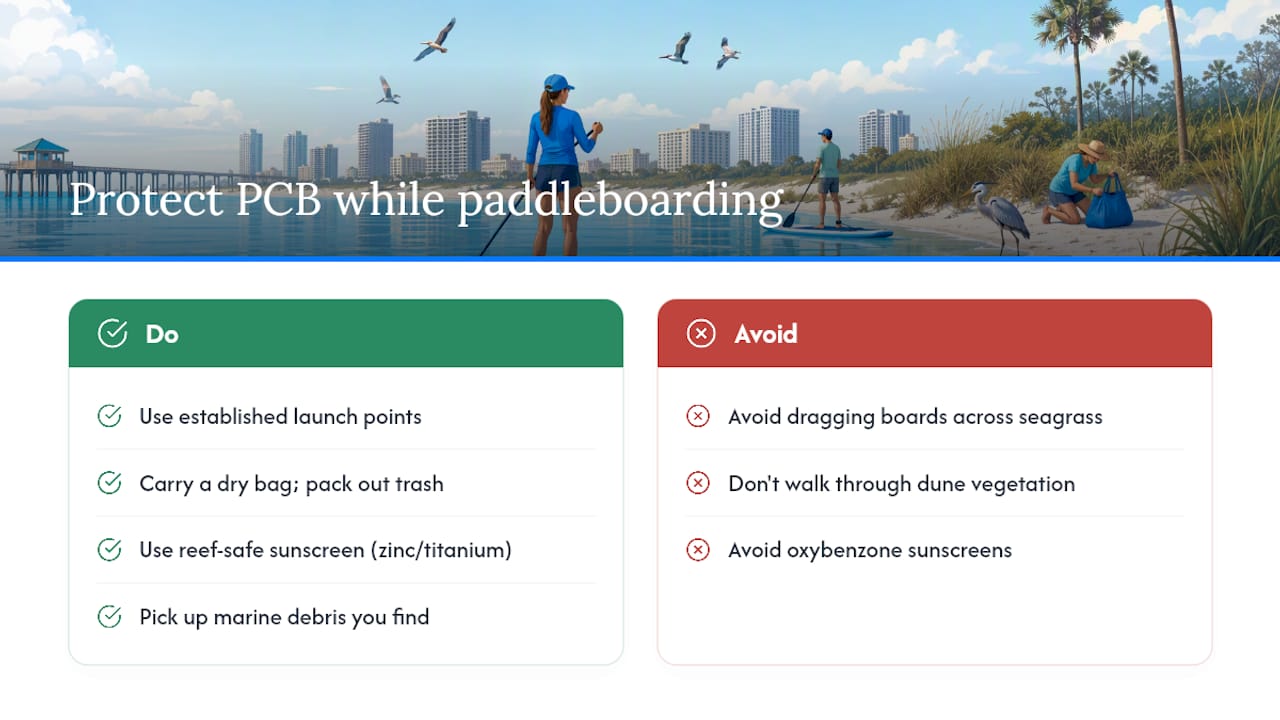
Stick to established launch points rather than dragging boards across seagrass beds or sensitive shoreline vegetation. Seagrass meadows in the lagoons are nursery habitat for fish and invertebrates; a single board dragged across them can cause damage that takes years to recover. At Shell Island, stay on the water or on open sandy beach areas and avoid walking through dune vegetation.
Carry a small dry bag for trash and bring it all back with you. Sunscreen matters here too: reef-safe, mineral-based formulas (zinc oxide or titanium dioxide) are less harmful to the marine environment than oxybenzone-based products, which have been shown to affect coral and marine life. Several local shops stock reef-safe options if you need to pick some up before heading out.
If you spot marine debris in the water, pick it up and pack it out. Many local paddlers treat this as a standard part of every outing, and it adds up. Some outfitters and community groups organize periodic cleanup paddles, which are worth joining if your schedule allows.
What paddleboarding clubs and community events are active in Panama City Beach?
Panama City Beach has a growing SUP community, and connecting with it is easier than most visitors expect.
Local outfitters like SUP Conscious Life and Coldwater Excursions occasionally host group paddles, seasonal events, and community cleanup outings. These are worth following on social media or asking about when you book. Scheduled events tend to cluster around spring (March through May) and fall (September through October), when conditions are ideal and the crowds thin out.
Bay County’s parks system, including Oaks by the Bay Park and Carl Gray Park, serves as informal gathering points for local paddlers on weekend mornings. No formal club structure is required; showing up at a public launch on a calm Saturday morning often means meeting regulars who know the water well and are happy to share local knowledge.
For visitors from Illinois and other inland states, the Florida Paddling Trails Association maintains resources on Gulf Coast paddling routes and connects paddlers with regional events. Checking Bay County’s official site for current park programming and event listings is a practical first step before your trip.
What locals know about paddleboarding here that visitors often miss
The paddlers who get the most out of PCB’s water aren’t necessarily the most experienced. They’re the ones who go early. The Grand Lagoon at 7:30 AM on a weekday in May is a completely different experience from the same spot at noon on a Saturday in July. The water is glassy, the dolphins are active, and you’ll have long stretches entirely to yourself.
Locals also tend to skip Shell Island on anything but a calm, clear day. The island is spectacular, but the open water crossing and tidal currents require real attention. The St.
Panama City Beach’s 27 miles of Gulf coastline back up to some of the most accessible flat-water paddling in the Panhandle. Whether you’re planning your first SUP outing or your tenth trip back, the combination of protected bay water, reliable wildlife, and a range of rental and guided options makes this one of the most well-rounded paddleboarding destinations on the Gulf Coast.
Sources
Use these official and local resources to confirm current rules, park hours, and provider availability before your trip.
-
Paddleboard and Kayak in Panama City — Destination Panama City
-
6 Best Places to Paddle Board in Panama City Beach, FL — SUP Guides
-
Panama City Beach Paddle Board Rentals - Shell Island Shuttle
Planning a trip around your paddleboarding adventure? Panamacitybeachflorida lists beachfront vacation rentals close to the top launch spots, from Grand Lagoon-area condos to homes near St. Andrews State Park. Staying within a short drive of your preferred launch point makes early-morning paddles far easier to pull off.
Recommended
About the Author
Joe Godar of the PanamaCityBeachFlorida.com Editorial Team creates destination guides, vacation-planning resources, and local travel content focused on Panama City Beach, Florida.
Our team researches local beaches, vacation rental trends, family activities, restaurants, attractions, events, and direct-booking best practices. Every guide is created to help travelers plan more confidently, experience the best of Panama City Beach, and avoid unnecessary third-party guest service fees.
PanamaCityBeachFlorida.com is part of the Emerald Coast by Owner marketing family, connecting travelers directly with verified vacation rental hosts throughout the Gulf Coast since 2016.
This article was reviewed for accuracy and updated using local destination research and current Panama City Beach vacation rental market insights.