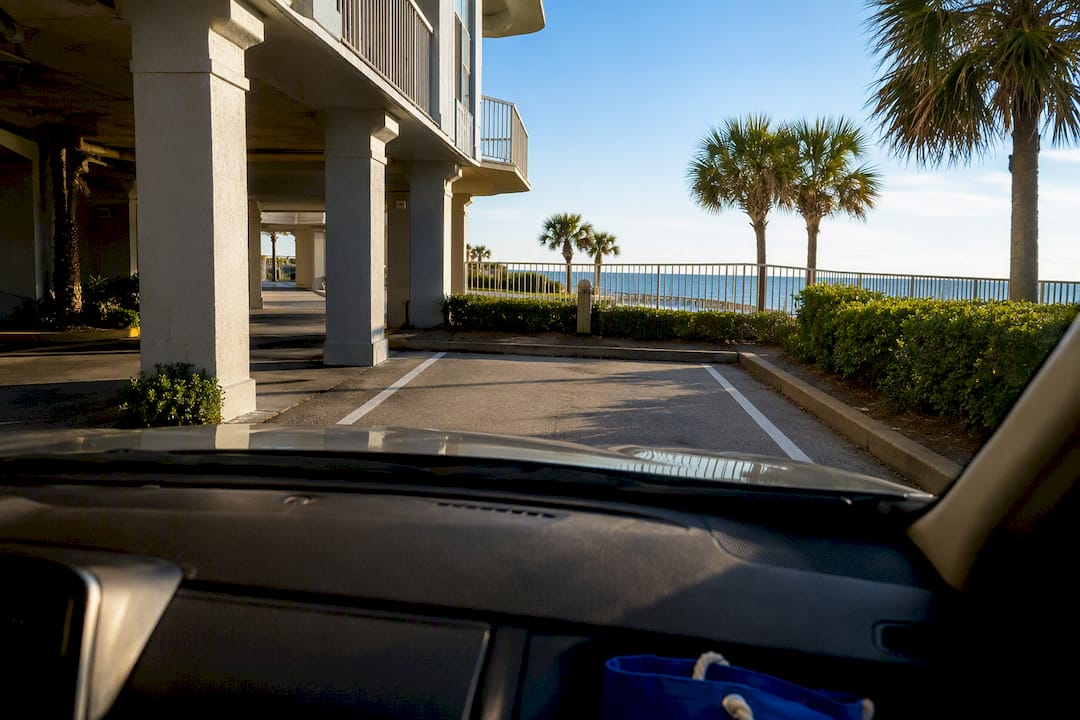
Most vacation condos have a defined guest parking process, but it varies widely: some units include a pass or two, others require you to register online, and some charge a per-vehicle gate fee on top of your rental cost. The one move that saves you a headache is simple. Confirm the exact authorization method, whether it’s an included pass, pre-registration, front-desk pickup, or a paid gate fee, before you ever pull up to the property.
TL;DR:
- Confirm the type of parking authorization, including passes, registration methods, or gate fees, before arriving at the condo to avoid surprises.
- Most properties ask for vehicle details like license plate, unit number, and arrival dates through online portals, QR codes, or at the front desk.
- Parking enforcement relies on scanned plates and permit records, making it essential to have registered your vehicle and keep proof handy.
- Extra passes, extensions, and overflow parking options vary; ask the host in advance to ensure your vehicle remains compliant.
- Planning backup parking options at nearby lots or garages can prevent delays during peak times when onsite parking fills up quickly.
Table of Contents
- What to Confirm With the Host Before You Book
- How Guest Parking Registration Usually Works
- Arrival Checklist: Parking and Proof
- If You’re Ticketed or Towed: Recovery Steps
- Backup Parking: Nearby Lots and Paid Garages
- How We Help Guests Avoid Parking Surprises
- Find Condos With Clear Parking Policies Listed
- Sources
- FAQ
What to Confirm With the Host Before You Book
Getting clear answers before you book beats guessing after you arrive with a car full of beach gear. A quick message to the host or rental company can settle every detail that affects your parking experience.
Ask specifically about:
- Whether a dedicated space or visitor pass comes with the unit, and exactly how many per condo
- The registration method: a prepaid online portal, an emailed link, a QR self-registration kiosk, front-desk pickup, or an RFID sticker
- Per-vehicle fees, gate charges, and whether pricing changes during peak season
- Height or size limits for trucks, and rules for trailers, boats, or a second vehicle
- How the property handles accessible parking for guests with disabilities
Some resort-style condos publish this information directly in the listing description, while others only send it after your reservation is confirmed. Booking platforms and hosts commonly share arrival instructions through a confirmation email or a follow-up message, so check both before assuming nothing came through.
Pro Tip: Screenshot your parking confirmation and save it in a folder on your phone. Cell service near the beach can be spotty, and you don’t want to be searching for a QR code with one bar of signal.
How Guest Parking Registration Usually Works
Registration systems vary by property, but most fall into a handful of familiar patterns. Knowing which one applies to your condo means you’ll have the right information ready instead of scrambling at check-in.
- Rental-company portals. The host or property manager adds your reservation to a system, and you receive an email to complete your vehicle details, including plate number, state, and arrival dates. Vendor platforms like VRPAccess let rental companies add reservations in advance, so your registration link often lands in your inbox before you even pack the car.
- QR-code kiosks or self-registration. Some properties skip the pre-arrival step entirely and let you scan a code at the gate or in the lobby to register on the spot.
- Paper hangtags or dashboard passes. You pick these up at the front desk and display them visibly on the dash or rearview mirror for the length of your stay.
- RFID stickers or gate credentials. These attach to your windshield and often come with strict rules. Nontransferable RFID and hangtag policies are common at resort-style HOAs.
Most systems ask for the same basic details: your name, unit number, license plate, and vehicle state, along with your exact arrival and departure dates. Visitor passes typically run on a limited time window of a few days, and some communities cap how many days a single guest vehicle can stay registered across a rolling calendar year. If your trip runs longer than the standard window, ask the host to extend your registration rather than assuming it renews automatically.
Arrival Checklist: Parking and Proof
The first ten minutes at a condo set the tone for your whole stay. A few quick habits at check-in keep your car out of trouble.
- Park only in marked visitor or general-use spaces. Skip anything labeled reserved, ADA (unless you’re authorized), a fire lane, or a loading zone.
- Place hangtags flat on the dash where they’re visible through the windshield, and make sure RFID stickers are affixed exactly where the instructions say.
- Pull up your registration confirmation email or screenshot before you walk into the lobby, so you’re not digging for it later.
- Ask the front desk about extra passes, extension options, and where overflow parking is if the lot fills up.
Condo parking enforcement generally runs through the community’s HOA rules and a contracted enforcement company, and ignoring the permit process can get a vehicle towed even when it’s parked close to your actual unit. A car that looks harmless to you can look like an unregistered guest to a patrol company doing a nightly sweep.
If You’re Ticketed or Towed: Recovery Steps
Getting a ticket or finding your car gone is stressful, but a clear sequence gets you back on the road faster and limits what you’ll pay.
- Photograph the posted signage and your vehicle’s original parking spot, with a visible timestamp.
- Bring your registration confirmation straight to the front desk or management office and ask for their help resolving it.
- Call the towing company listed on the signage to confirm your car’s location and request a written fee schedule.
- If you believe the tow was a mistake, note every timestamp you have and ask management to pull gate logs or camera footage.
- If the property won’t cooperate and you believe you were wrongly towed, escalate the complaint to your local consumer protection office.
Enforcement in most communities relies on scanned license plates matched against permit records, so a timestamped registration confirmation is usually the fastest way to prove you followed the rules.
Pro Tip: Never argue with the tow truck driver at the scene. They’re rarely the ones who can waive a fee. Go straight to property management, since they’re the ones with authority over the account.
Backup Parking: Nearby Lots and Paid Garages
Not every condo guarantees a spot for every vehicle, especially during spring break or the Fourth of July when lots fill fast. Having a backup plan means a full lot never turns into a lost afternoon.
- Scope out municipal lots or private garages within walking distance, and check their posted hours and rates ahead of time.
- Look into prepaid or reservable parking apps in areas that offer guaranteed spaces, which can beat circling for street parking.
- Ask your host about temporary unloading zones for dropping off luggage and beach gear before you find a permanent spot.
- Drop a pin on a fallback lot in your GPS app and estimate the walk with coolers, umbrellas, and kids in tow.
When on-site parking runs short, pairing with nearby garages or leaning on rideshare and transit is a common workaround for properties in tighter beach corridors. If your condo doesn’t have dedicated parking at all, budget the extra cost and walking time into your trip planning the same way you’d budget for parking at any beach destination.
How We Help Guests Avoid Parking Surprises
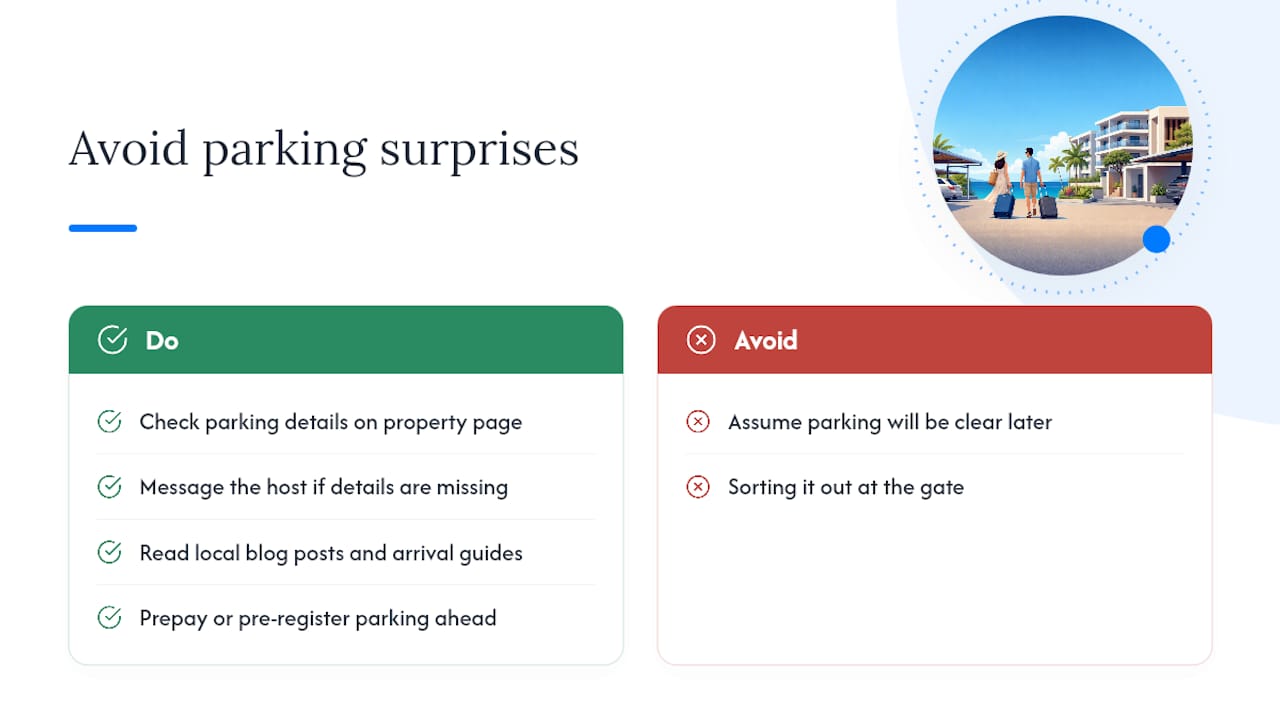
The website includes parking details in property pages when hosts provide them, so visitors can see pass counts and fees before committing to a listing. If a property page doesn’t spell it out, that’s your cue to message the host directly and ask.
Our local blog posts and arrival guides go a step further, covering nearby lots and registration walkthroughs specific to different stretches of the beach. Peak season here gets crowded fast, and prepaying or pre-registering ahead of time is almost always easier than sorting it out at the gate with a car full of gear and kids ready for the water.
— Joe
Find Condos With Clear Parking Policies Listed
Panamacitybeachflorida is built to remove exactly this kind of guesswork. Many of our vacation rental listings spell out whether parking is included and how many passes come with the unit, so you’re not left messaging five hosts just to compare basics.
If a listing does not state pass counts, visitors may contact the host directly through the property page to confirm extra-pass availability and fees before booking. For a broader look at what’s out there along the coast, our condo rental guide breaks down neighborhoods and amenities side by side. Start your search on our Panama City Beach vacation rentals page and filter for properties that state their parking policy up front, so your next beach trip starts with a guaranteed spot instead of a scramble.
Sources
For deeper detail, see LegalClarity’s guide to visitor parking registration forms, the VRPAccess vendor overview for how rental companies manage passes, and a sample HOA gate-fee schedule for how fees and RFID rules are typically structured.
- How to Fill Out and Submit a Visitor Parking Registration Form — LegalClarity
- VRPAccess rental company guide (vendor overview)
Recommended
- How to Choose a Vacation Rental That Actually Fits Your Trip
- Arrive Ready: Panama City Beach Parking: Passport App for Kansas Travelers

About the Author
Joe Godar of the PanamaCityBeachFlorida.com Editorial Team creates destination guides, vacation-planning resources, and local travel content focused on Panama City Beach, Florida.
Our team researches local beaches, vacation rental trends, family activities, restaurants, attractions, events, and direct-booking best practices. Every guide is created to help travelers plan more confidently, experience the best of Panama City Beach, and avoid unnecessary third-party guest service fees.
PanamaCityBeachFlorida.com is part of the Emerald Coast by Owner marketing family, connecting travelers directly with verified vacation rental hosts throughout the Gulf Coast since 2016.
This article was reviewed for accuracy and updated using local destination research and current Panama City Beach vacation rental market insights.