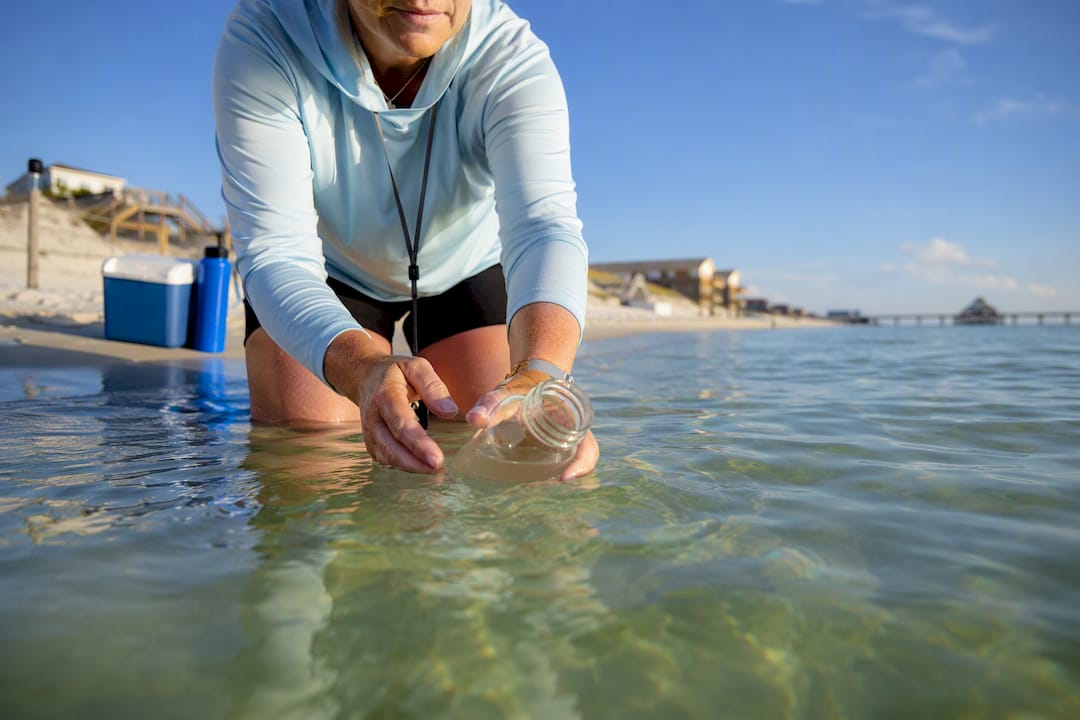
Before you pack the cooler, check the Florida Fish and Wildlife Conservation Commission’s red tide map or call its hotline at 866-300-9399. Red tide status changes by the week, sometimes by the day, so there is no single answer that stays true for long. If you or someone traveling with you has asthma or another chronic lung condition, treat a positive report near Panama City Beach as a reason to pick a different stretch of sand that day, not a reason to cancel the trip.
TL;DR:
- Checking the FWC water sample map and NOAA forecasts daily helps determine if red tide is present near Panama City Beach, as conditions shift frequently.
- Onshore wind increases the risk of aerosolized toxins affecting beachgoers with asthma or respiratory issues, while offshore wind reduces exposure.
- Recreational shellfish harvesting is unsafe during blooms, but commercial seafood remains safe due to strict monitoring and regulations.
- Red tide impacts are often localized, so affected areas at one beach access point do not necessarily mean the entire coastline is affected.
- Booking flexible accommodations with reliable air conditioning allows visitors to easily adjust plans when red tide conditions worsen unexpectedly.
Table of Contents
- How to Check Current Red Tide Conditions at Panama City Beach
- Health Impacts and Who Is Most at Risk
- Practical Safety Steps for Beachgoers and Travelers
- Pets, Wildlife, and Reporting Fish Kills
- Seafood and Fishing Guidance During a Bloom
- What Panama City Beach Visitors Should Know About Localized Blooms
- Planning a Trip Around Red Tide Season
- If You Need Flexible Lodging in Panama City Beach
- Sources
- FAQ
How to Check Current Red Tide Conditions at Panama City Beach
You have three real sources worth trusting, and none of them are a Facebook post from someone who “heard from a lifeguard.”
The FWC’s daily sampling map plots water samples collected by researchers and volunteers along the Gulf Coast, color coded by Karenia brevis cell concentration. A dot on or near Panama City Beach means someone tested water there recently. No dot doesn’t mean no red tide. It means no recent sample, so pair the map with the most recent update date shown on the page rather than assuming a blank spot equals a clean beach.
The FWC hotline (866-300-9399) gives a recorded regional update, useful when you’re driving in with spotty cell service. NOAA’s harmful algal bloom forecasts for the Gulf of Mexico go a step further, using satellite imagery and current data to project where a bloom is likely to drift over the next several days.
Before you head out, run through this quick check:
- Pull up the FWC map and look for the most recent sample near Panama City Beach.
- Check NOAA’s forecast for bloom movement toward the coast.
- Note the wind direction for the day (more on why that matters below).
- Confirm your local beach flag color at your specific access point.
Health Impacts and Who Is Most at Risk
Karenia brevis, the organism behind red tide, releases brevetoxins that irritate the respiratory tract, eyes, and skin when waves break and toxins become airborne. Most healthy adults notice a scratchy throat, watery eyes, or a mild cough that clears up once they leave the beach. It’s unpleasant, not dangerous, for the majority of visitors.
People with asthma or chronic obstructive pulmonary disease face a different equation. For that group, brevetoxin exposure can trigger a genuine asthma attack or a lasting flare in breathing symptoms, not just irritation. Children, older adults, pregnant women, and anyone immunocompromised should treat a red tide advisory with more caution too, since their airways or immune responses handle irritants less efficiently.
Wind direction decides who actually breathes the aerosolized toxin. Onshore wind, blowing from the Gulf toward the beach, pushes spray and irritants into the air you’re standing in. Offshore wind carries that same spray away from you, which is why two beachgoers a mile apart can have completely different experiences on the same day. Anyone working near the water for a living should also review Florida’s occupational exposure guidance, which covers PPE and wind-based precautions for coastal jobs.
Practical Safety Steps for Beachgoers and Travelers
A little prep turns a red tide advisory from a trip ruiner into a minor scheduling issue. Here’s the order that actually works:
- Check before you leave. Look at the FWC map, NOAA’s forecast, and the Florida Department of Health’s red tide guidance the morning of your beach day, since conditions can shift overnight.
- Check the wind. Onshore wind on a red tide day is your cue to pick an alternate activity or a different beach access point.
- Watch for on-site warning signs. Dead fish along the shoreline, discolored or reddish-brown water, and unusual foam are all signals to walk back to the car, not further onto the sand.
- Respond to symptoms fast. If your eyes burn or you start coughing, head to an air-conditioned space right away. Use a rescue inhaler if one is prescribed to you, and see a doctor if symptoms don’t ease once you’re indoors.
- Rinse and wash. Shower with fresh water after any beach time during a bloom, and wash your hands before eating anything, since residue on skin can transfer easily.
Pro Tip: Check a wind forecast app the night before and pencil in your beach block for whatever window shows offshore wind. Red tide symptoms track wind direction almost as closely as they track cell counts.
Pets, Wildlife, and Reporting Fish Kills
Pets have no idea what red tide is, which is exactly the problem. Dogs sniff dead fish, sometimes eat them, and the toxin residue on fur or paws can be licked off later even if your pet never touches the water directly.
- Keep pets away from any dead fish, foam, or debris piles on the sand.
- Rinse your pet with fresh water immediately if they’ve been in the surf during a bloom.
- Call a vet promptly if your pet vomits, seems disoriented, or won’t eat after a beach visit.
- Report significant fish kills or sick marine wildlife to the FWC’s fish kill hotline so crews can track the bloom’s footprint.
Local agencies handle beach cleanup during active blooms, but volume varies with the size of the event, so don’t expect every dead fish to disappear within hours.
Seafood and Fishing Guidance During a Bloom
The seafood on your dinner plate at a Panama City Beach restaurant almost always came from monitored, regulated waters, which is what keeps commercial seafood safe to eat even during an active bloom nearby.
Recreational shellfish harvesting is the real risk. Brevetoxins concentrate in filter feeders like oysters, clams, and mussels, and eating shellfish pulled from an affected area can cause neurotoxic shellfish poisoning.
- Never eat shellfish you harvest yourself from water under a red tide advisory.
- Check for active shellfish harvesting closures before you dig for clams or pull oysters.
- Finfish you catch and clean yourself are generally lower risk, but skip any fish acting sluggish or already found dead.
What Panama City Beach Visitors Should Know About Localized Blooms
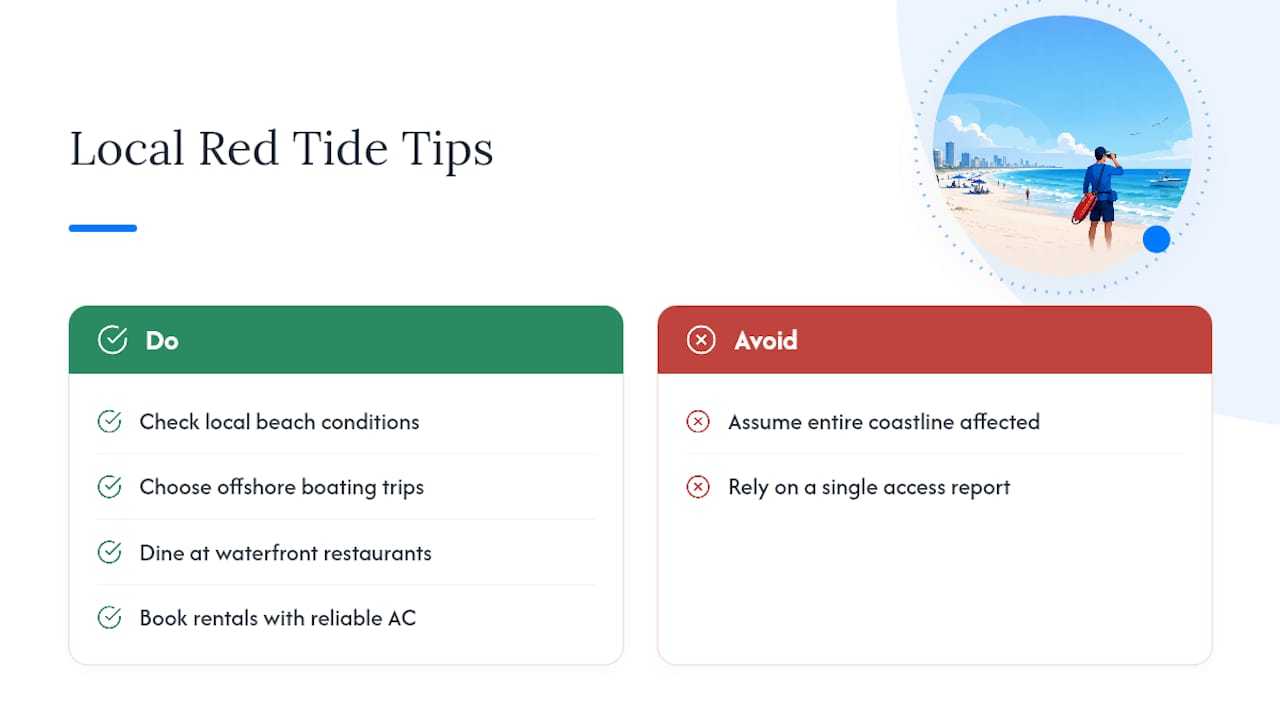
Panama City Beach runs along a long stretch of the Gulf, and red tide rarely blankets every mile at once. A bloom reported at one access point doesn’t mean the whole coastline is affected, since currents and wind keep blooms shifting and patchy rather than static.
If your usual stretch of sand is affected, you still have options. Offshore boating trips often put you well clear of shoreline irritation, waterfront restaurants let you enjoy the view without the exposure, and a rental with reliable air conditioning gives you an easy retreat if anyone in your group starts feeling symptoms. Booking a stay with some flexibility, and checking the best time of year to visit, also takes pressure off any single beach day.
Planning a Trip Around Red Tide Season
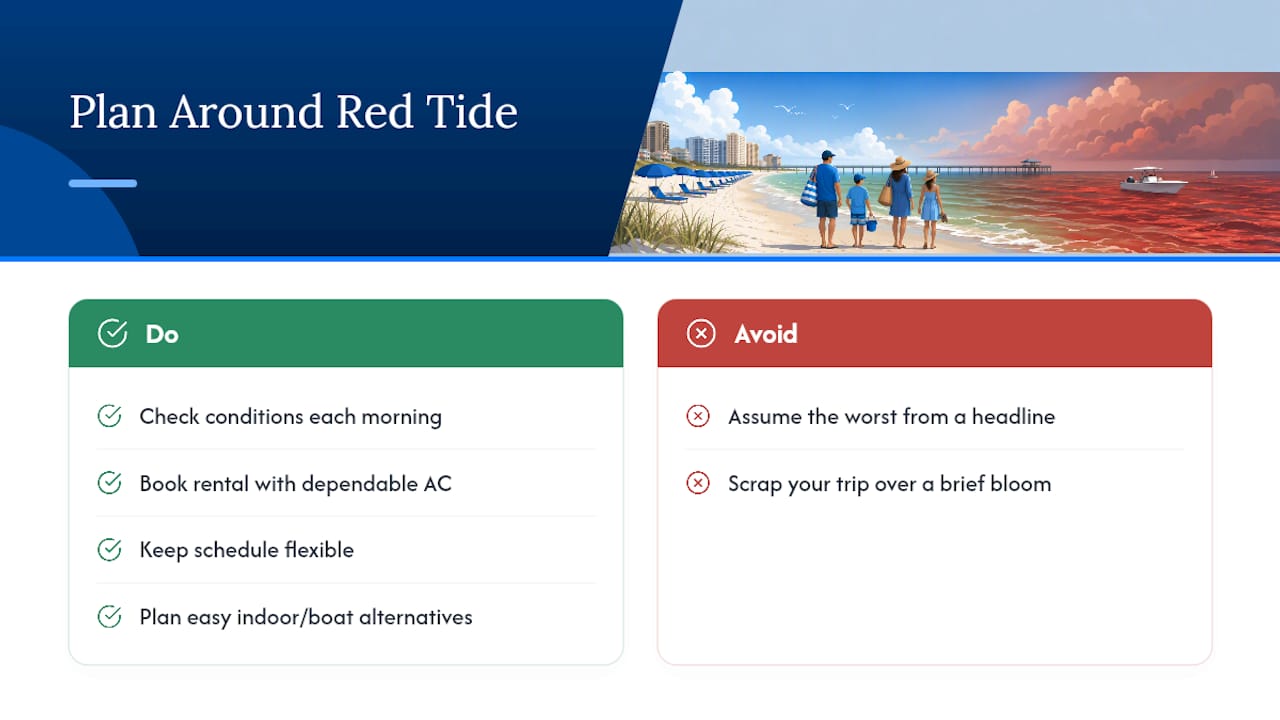
Red tide near Panama City Beach is almost always temporary. Blooms build, drift, and clear on their own timeline, and most trips proceed with maybe a day or two of adjusted plans rather than a scrapped vacation. The travelers who handle it best are the ones who check conditions each morning instead of assuming the worst from a headline.
Booking a rental with dependable air conditioning and a little flexibility in your schedule takes most of the stress out of the equation. A red tide alert becomes an afternoon indoors or a boat trip, not a ruined week.
— Joe
If You Need Flexible Lodging in Panama City Beach
A hotel room with a locked check-in time gives you nowhere to go if a red tide advisory hits your beach access on day two of a five-day trip. The marketplace is designed to accommodate that kind of shift. Browsing our Panama City Beach vacation rentals puts you in direct contact with owners who can tell you about air conditioning, indoor living space, and proximity to alternate beach accesses before you ever book.
We’re not claiming any rental changes what’s happening in the water. What a good rental does is give your group somewhere comfortable to wait out a rough air-quality window, cook a meal instead of driving around looking for one, and pivot to a different beach access the next morning. If your dates need a plan B built in from the start, check available Panama City Beach condos and homes and filter for the amenities that matter most to your group.
This article is general information, not a substitute for advice from a qualified doctor. Consult a qualified healthcare professional about your own circumstances before acting on anything here.
Sources
- Harmful algal blooms and human health: A review
- Red Tide Current Status
- NOAA harmful algal bloom forecasts — Gulf of Mexico
Recommended
- Panama City Beach Safety: What Illinois Travelers Should Know
- Panama City Beach Flag Colors: What Each One Means
- Best Time to Visit Panama City Beach, Florida

About the Author
Joe Godar of the PanamaCityBeachFlorida.com Editorial Team creates destination guides, vacation-planning resources, and local travel content focused on Panama City Beach, Florida.
Our team researches local beaches, vacation rental trends, family activities, restaurants, attractions, events, and direct-booking best practices. Every guide is created to help travelers plan more confidently, experience the best of Panama City Beach, and avoid unnecessary third-party guest service fees.
PanamaCityBeachFlorida.com is part of the Emerald Coast by Owner marketing family, connecting travelers directly with verified vacation rental hosts throughout the Gulf Coast since 2016.
This article was reviewed for accuracy and updated using local destination research and current Panama City Beach vacation rental market insights.