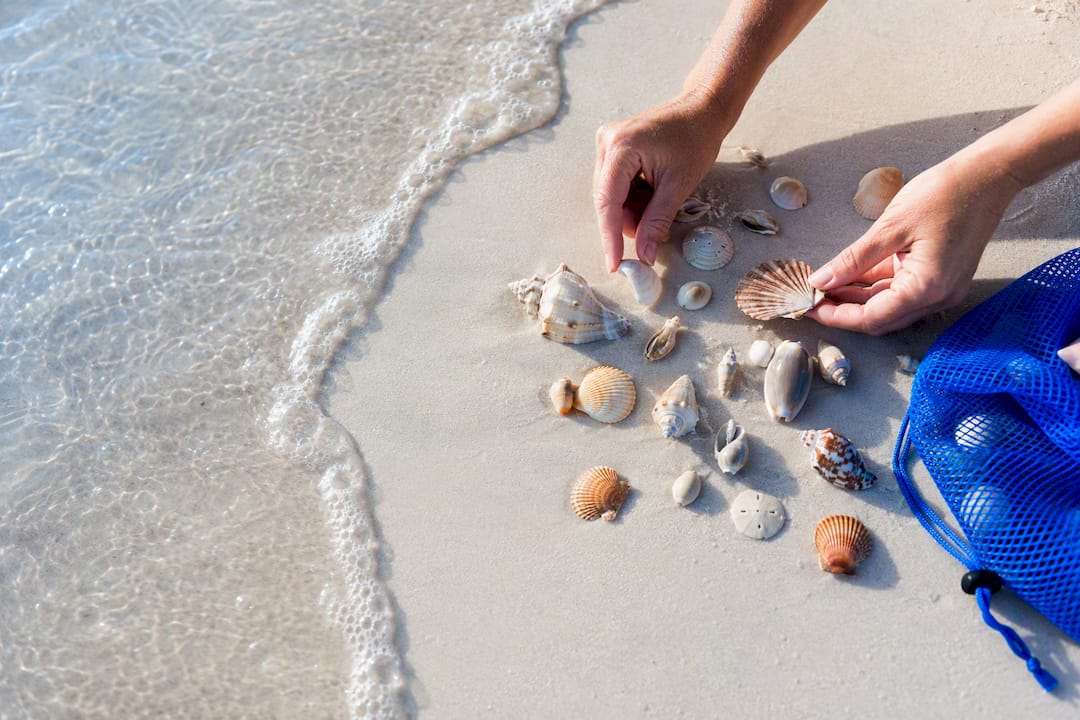
Yes, shelling in PCB is worth planning your trip around. Start at Shell Island or St. Andrews State Park during the early period before low tide, when the widest stretch of sand is exposed and shell beds are freshest. Bring a mesh bag, check every shell for signs of life before you pocket it, and only ever keep the empties.
TL;DR:
- Shell Island’s boat-only access limits foot traffic, allowing for more diverse and abundant shell beds compared to busier beaches.
- Visiting during 60 to 90 minutes before low tide ensures exposure of the widest sand area and freshest shells for collecting.
- Check shells for signs of life such as movement or a closed hinge before collecting, as roughly a third of shells still house live animals.
- Stormy weather and passing storms often churn up shells buried deeper, creating opportunities for rare finds within a day or two of rough weather.
- Responsible shelling requires avoiding live animals, respecting nesting zones during turtle season, and leaving shells for others to preserve the coastline’s health.
Table of Contents
- Where to Find Shells in Panama City Beach
- What Shells Will You Find in PCB?
- When Is the Best Time to Go Shelling in PCB?
- Responsible Shelling and Florida Rules to Know
- Shelling Techniques and What Gear to Bring
- Getting to the Best Shelling Spots
- A Local’s Checklist for Shelling in Panama City Beach
- Base Your Shelling Trip From a Beachfront Rental
- Official Rules and Reference Guides
- Sources
- FAQ
Where to Find Shells in Panama City Beach
Shell Island sits at the top of most local lists for a reason. This barrier island near St. Andrews Pass has almost no development, and that isolation lets shell beds build up without the daily foot traffic that thins out other beaches. You can only reach it by boat, whether that’s the seasonal shuttle from St. Andrews State Park or a private charter, and that access barrier is exactly what keeps the variety high. The Gulf side tends to produce whelks and larger scallop shells, while the calmer bay side is better for smaller, more delicate finds like olive shells and jingle shells.
St. Andrews State Park itself is worth a full morning even if you never board a boat. The park’s jetties create pockets where shells collect after tidal shifts, and the tide pools near the rock groins often hold hermit crabs, small fish, and shells too fresh to have washed up on the open beach yet. The Gulf-facing shoreline inside the park behaves differently from the calmer bay side near the camping area, so it pays to walk both.
Beyond those two anchors, Panama City Beach has close to 100 public access points, and a handful reward shellers specifically:
- West End pockets near the state park boundary see less foot traffic than the main tourist strip, especially on weekday mornings.
- Post storm stretches anywhere along the coast can turn up rare finds within a day or two of rough weather, since wave action churns up shells buried in deeper sand.
- Low tide flats near any public access marked on the beach access map are worth checking even if you’re not near Shell Island.
A guided charter earns its cost when you want the boat-only stretches without owning a boat, or when you’re traveling with kids who’ll get more out of a guide’s on-the-spot identification than a solo wander.
What Shells Will You Find in PCB?
Panama City Beach produces a steady mix of species, and knowing what you’re looking at saves you from either tossing something valuable or pocketing something alive. Local shell surveys consistently list coquina, cockles, scallops, olive shells, whelks, jingle shells, slipper shells, and sand dollars as the beach’s regulars.
Coquina shells are small, wedge-shaped, and often striped in pink or purple. Cockles have deep, rounded ridges and a heart-shaped profile when viewed from the side. Scallops carry the classic fan shape most people picture when they hear “seashell,” with ridges radiating from a hinge point. Olive shells are smooth, cylindrical, and glossy, almost like a polished stone. Whelks are larger spiral shells, and the lightning whelk is the one true local celebrity: it’s one of the few shells in the world that spirals left-handed instead of right, so holding the opening toward you and seeing it on the left is a dead giveaway. Jingle shells are thin, iridescent, and often called mermaid’s toenails locally. Slipper shells are curved and boat-shaped with a small shelf inside. Sand dollars are flat, round, and marked with a five-point star pattern.
Before anything goes in your bag, check for life. A closed hinge that resists gentle pressure, an operculum (the little trapdoor some snails use to seal their shell), visible tube feet on a sand dollar, or any twitch or movement at all means the animal is still home.
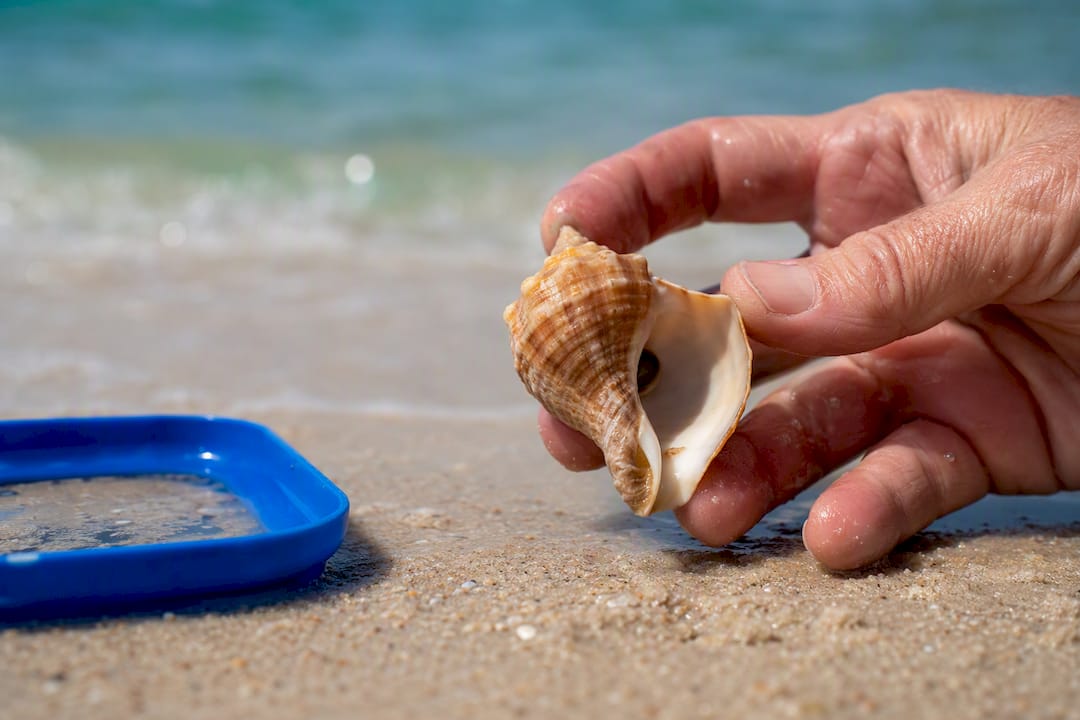
Pro Tip: Snap a quick phone photo of any shell you’re unsure about before you touch it further. If it turns out to be alive, you’ll have the picture for identification and the animal stays right where it belongs.
Roughly a third of shells found intact on Gulf Coast beaches still house their original occupant, according to shelling guides that cover common Panama City Beach species, which is exactly why the check-first habit matters more than speed.
When Is the Best Time to Go Shelling in PCB?
Tide timing matters more than almost anything else in your plan. Arriving 60 to 90 minutes before low tide gives you the widest exposed sand and the freshest shell beds, before other visitors have picked through them and before the tide starts covering everything back up.
- Pull up a tide chart for the Panama City Beach area the night before your outing.
- Set an alarm for 90 minutes ahead of the predicted low tide, not the low tide itself.
- Skip days with high surf or onshore wind warnings, since rough water makes wading unsafe even if the shelling upside looks tempting.
- Check conditions again the morning after any storm passes through, since storms churn up shells buried deeper in the sand and can produce rare finds within a day or two.
Season shapes your experience differently than tide does. Summer brings the biggest crowds and the most competition for fresh shells, while shoulder season months mean quieter beaches and less-picked-over sand, a tradeoff worth weighing against your best time to visit plans. From May through October, sea turtle nesting season adds another layer: marked nests appear across PCB beaches, and shelling near them, especially early morning or after dark, needs extra caution and distance.
Pro Tip: Storm swell looks exciting, but the same waves that expose rare shells also create dangerous currents. Wait for calmer water even if it means a slower shelling day.
Responsible Shelling and Florida Rules to Know
Florida’s baseline shelling rule is simple: don’t take anything alive. Many coastal areas prohibit collecting shells with a living animal inside, and the expectation statewide is that you check every find and return anything alive to the water immediately. Some Florida counties have gone further with outright bans on live shell collection, and enforcement is real, so treat the check-first habit as non-negotiable rather than optional.
Turtle nesting season runs May through October, and marked nests show up on PCB beaches during that stretch. Shelling near those ropes at dusk or after dark isn’t just discouraged, it’s genuinely risky for the nests and hatchlings, so plan your evening walks well clear of any marked area.
Most everyday shelling on public beaches needs no permit. Larger-scale or commercial harvesting is a different story, and if you’re ever unsure whether your plan crosses that line, a quick check with the Florida Fish and Wildlife Conservation Commission or the state park office settles it before you’re standing on the sand with a bucket you shouldn’t have filled.
Take a few favorites, leave some behind, respect the ropes around nesting areas, and pack out everything you brought in. That’s the whole code, and it’s the same one experienced local guides live by.
- Check every shell for life before it leaves the beach.
- Give nesting ropes and marked zones a wide berth.
- Leave a fair share of shells for the next visitor.
- Carry your trash out, even the small stuff.
Shelling Techniques and What Gear to Bring
The net-and-scoop method beats blind digging most days. Wade into ankle-deep water, hold a small net at the sand line, and skim it along the leading edge of an outgoing wave. Shells caught this way arrive intact instead of getting tumbled and chipped across the sand, so you end up with better specimens for less effort.
- Wade out to ankle or knee depth where the wave line breaks.
- Skim your net just ahead of a receding wave, letting the water do the sorting.
- Dump the catch onto a flat, dry spot and sort through it quickly before the next wave hits.
- For shallow snorkel shelling, stay in water you can stand in, keep a buddy nearby, and never snorkel near boat channels or jetty currents.
Gear stays simple. A mesh bag drains water and sand as you walk, a small hand rake or trowel helps without disturbing too much sediment, a wooden-handled net outlasts flimsy plastic ones, and gloves protect your hands from sharp barnacle edges. Add a bucket for sorting, sunscreen, and a waterproof phone sleeve so you can still snap identification photos.
Pro Tip: Rinse shells in plain fresh water and let them air-dry in shade. Skip bleach or harsh cleaners, since they can strip the natural color and shine that made you want to keep the shell in the first place.
Getting to the Best Shelling Spots
Reaching Shell Island usually means one of two routes: the seasonal shuttle running out of St. Andrews State Park, or a private charter if you want flexibility on timing and drop-off point. The shuttle is cheaper and simpler for a single day trip; a charter gives you control over exactly when you arrive relative to low tide.
- St. Andrews State Park has multiple parking areas, and the lots near the jetties put you closest to the best shelling stretches.
- Facilities inside the park include restrooms and rinse stations, useful after a few hours of wading.
- A guided charter or shelling tour pays off most for remote, boat-only beaches or when you want an expert pointing out species as you go.
- If you’re beaching a private boat, stay off vegetated dunes and roped nesting zones. Captains who respect those areas help keep the whole coastline productive for everyone.
Sun exposure and shifting tides catch first-timers off guard more than anything else, so a quick read of Panama City Beach safety basics before you head out is worth the five minutes.
A Local’s Checklist for Shelling in Panama City Beach
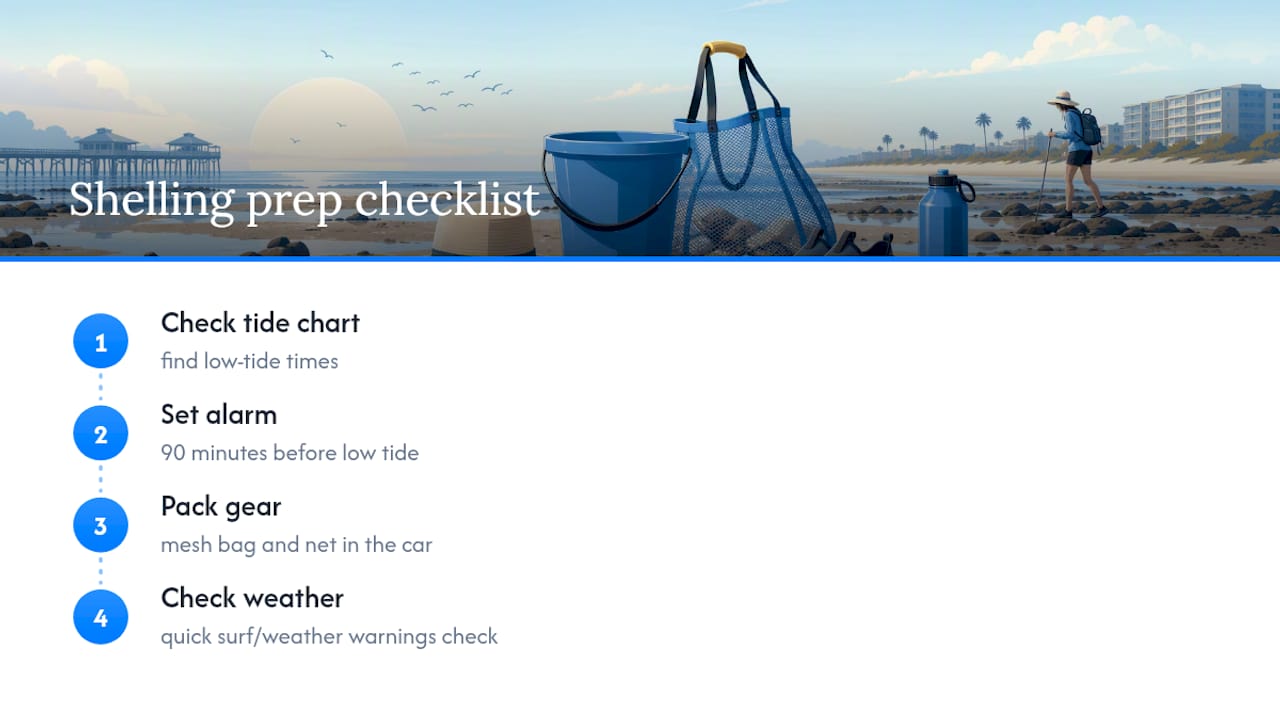
Before any shelling trip, I run through the same short checklist: tide chart pulled up, alarm set for 90 minutes before low tide, mesh bag and net in the car, and a quick weather check for surf warnings. It’s not complicated, but skipping any one of those steps is usually why a trip falls flat.
The best find I’ve seen on this coast wasn’t rare at all. It was a perfectly intact lightning whelk, spiral opening on the left just like it should be, sitting in a tide pool near the St. Andrews jetties about an hour after a passing storm. Nobody planned that timing. It just happened to line up.
Leave the beach a little better than you found it, and there will be shells worth finding for the next person too.
— Joe
Base Your Shelling Trip From a Beachfront Rental
Skip the drive-in-from-off-the-beach scramble that ruins most low-tide windows. Vacation rentals near the beach put you steps from the sand instead of a 20 or 30-minute drive away, which matters when your alarm is set for 90 minutes before low tide and every minute counts.
A rental near St. Andrews State Park puts you closest to the jetties and shuttle dock for Shell Island. If you’re chasing the quieter West End pockets, a rental closer to that stretch cuts your morning commute to almost nothing. Many properties also offer parking suited to loading beach gear, coolers, or even a small boat trailer if you’re bringing your own way out to the island. Browse Panama City Beach vacation rentals and pick a spot close to whichever shelling window you’re planning around, then check dates before the next low tide fills up your calendar.
Official Rules and Reference Guides
For real-time planning, check Florida’s shelling and harvesting guidance, St. Andrews State Park’s shuttle schedule, a current tide chart, and a photo shell ID guide before you head out.
Sources
Recommended

About the Author
Joe Godar of the PanamaCityBeachFlorida.com Editorial Team creates destination guides, vacation-planning resources, and local travel content focused on Panama City Beach, Florida.
Our team researches local beaches, vacation rental trends, family activities, restaurants, attractions, events, and direct-booking best practices. Every guide is created to help travelers plan more confidently, experience the best of Panama City Beach, and avoid unnecessary third-party guest service fees.
PanamaCityBeachFlorida.com is part of the Emerald Coast by Owner marketing family, connecting travelers directly with verified vacation rental hosts throughout the Gulf Coast since 2016.
This article was reviewed for accuracy and updated using local destination research and current Panama City Beach vacation rental market insights.