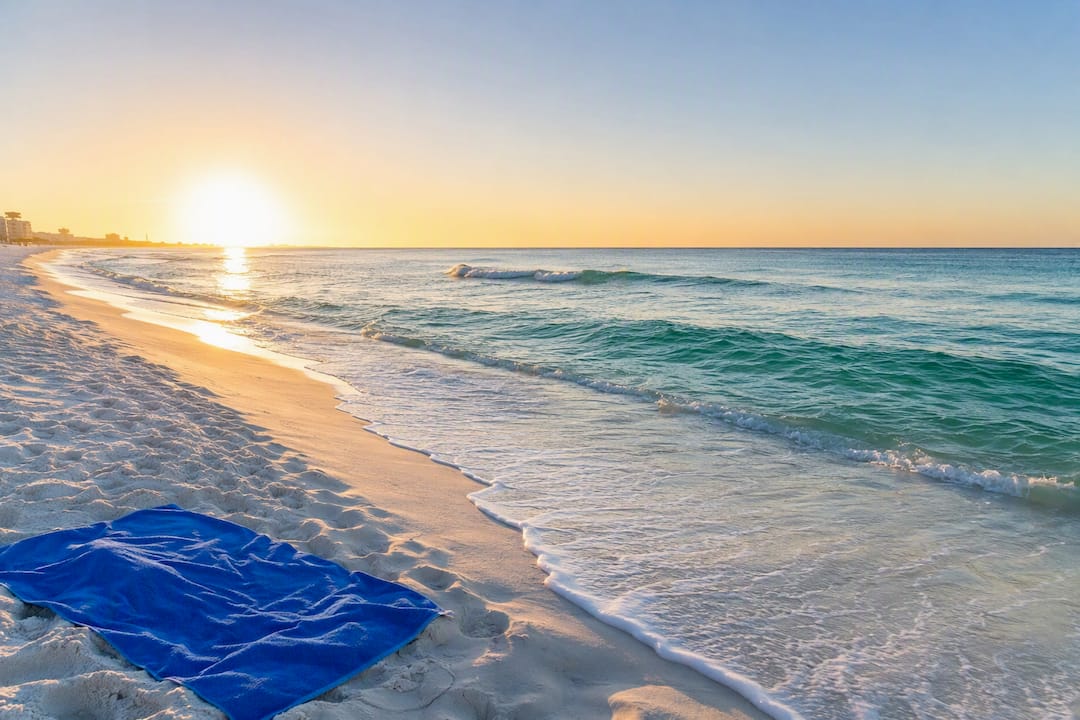
The best overall windows to visit Panama City Beach are the shoulder months, April through May and September through October because they balance warm Gulf water, lighter crowds, and better nightly rates. Summer brings the warmest swimming and the busiest beaches, while winter delivers the lowest prices and the quietest sand. Just plan around hurricane season, which runs June through November with peak risk typically in September.
TL;DR:
- Visiting in April or October offers warm water, lighter crowds, and significantly lower prices compared to summer peak season.
- Book at least four weeks in advance for shoulder-season stays, with mid-week bookings often yielding better rates and availability.
- Fall requires caution during September due to hurricane risk, but October and November generally offer safe conditions and lower storm activity.
- January and February provide the lowest rates and widest rental options, ideal for budget travelers willing to endure cooler weather.
- Summer remains the hottest and most crowded period with quick booking lead times, while spring break week in March attracts large crowds and high demand.
Table of Contents
- When Is the Best Time to Visit PCB for Weather and Crowds?
- Summer (June–August): Peak Season Realities
- Fall (September–November): Warm Water, Fewer Crowds, and Real Value
- Winter (December–February): Quiet Beaches and Budget Stays
- Why April–May and September–October Are the Best Compromise
- How Busy It Gets, Typical Price Expectations, and Booking Rules of Thumb
- Hurricane Season Timing and Practical Traveler Safeguards
- Local Expertise and Practical Tips From Panama City Beach
- A Straight Answer From Someone Who’s Studied This Closely
- Book Your Panama City Beach Stay Around the Weather, Not the Guesswork
- Sources
- FAQ
When Is the Best Time to Visit PCB for Weather and Crowds?
Before you book, it helps to know how Panama City Beach actually changes month to month. Spring, summer, fall, and winter each bring a different mix of temperature, water conditions, and foot traffic on the sand, and the right pick depends less on the calendar and more on what you want out of the trip.
If you’re chasing the warmest water and the most going on, summer delivers. If you want a quieter beach without giving up warm swims, the shoulder months are hard to beat. If your budget is the deciding factor above everything else, winter wins outright. Here’s how each season actually plays out.
Spring (March–May): What to Expect
Spring in Panama City Beach starts cool and finishes warm. Early March highs often sit in the mid 60s, while late May routinely climbs into the low 80s. Gulf water temperatures follow the same arc, starting around 60 degrees in March and warming into genuinely swimmable territory by late April and May.
March is the month to watch carefully. Spring break crowds peak during this stretch, significantly increasing traffic, restaurant wait times, and rental rates across the board. If you’re traveling with young kids or just want a mellow beach week, U.S. News Travel’s guidance is blunt about it: avoid March unless you’re specifically looking for that high-energy college crowd.
Late April into May tells a different story entirely. The water has warmed enough for comfortable swimming, the spring break wave has cleared out, and the beach starts to feel like your own stretch of sand again.
- Early March: Spring break peak, heaviest crowds, highest short-term demand
- Late March to early April: Crowds thinning, water still on the cool side
- Late April to May: Warm water, manageable crowds, comfortable highs in the high 70s to low 80s
- Best fit: Travelers who want early-season warmth without full summer humidity, and anyone who wants to dodge spring break entirely
Spring also brings a handful of local festivals and fishing tournaments that add energy to the beach without the density of a summer weekend. If your dates are flexible, aiming for the back half of April through Memorial Day tends to give you the best version of spring PCB.
Summer (June–August): Peak Season Realities
Summer is Panama City Beach at full volume. Highs regularly reach very warm temperatures, humidity climbs right alongside them, and Gulf water temperatures reach their warmest swim conditions of the entire year. This is when the beach looks like the postcard: packed sand, paddleboards everywhere, and every waterfront restaurant running a wait list.
That popularity comes with real trade offs. Rental properties book out weeks or months in advance for the best beachfront spots, and prices climb accordingly. Families dominate the calendar because summer aligns with school break, so expect the busiest stretch to run from mid June through the first week of August.
Afternoon thunderstorms are practically a daily fixture in summer, driven by the same heat and humidity that makes the water so warm. Climatology data for the region shows June through August as both the hottest and the wettest months of the year, with storms typically rolling in during the afternoon and clearing by evening.
- Typical highs: Upper 80s to low 90s, with heat index often feeling hotter
- Water temperature: Mid 80s, the warmest of the year
- Booking lead time: 2 to 4 months out for beachfront properties during peak weeks
- Daily pattern: Clear mornings, afternoon storms, clearing evenings
- Best fit: Families locked into school schedules and anyone who wants maximum warm water time regardless of crowd size
Pro Tip: Plan your beach hours for morning through early afternoon, then shift to indoor activities, shopping, or an early dinner once the summer storm clouds build. It’s a rhythm every local falls into by July.
Summer events lean toward big, family-friendly programming, from fireworks displays around Independence Day to weekly beach concerts. If you’re set on a summer trip, booking your rental as early as possible is the single best move you can make.
Fall (September–November): Warm Water, Fewer Crowds, and Real Value
Fall might be the most underrated stretch on the Panama City Beach calendar, and it’s the season locals quietly prefer. The Gulf holds onto its summer heat far longer than the air does, staying warm enough for comfortable swimming well into October according to PanamaCityBeachFlorida’s own seasonal guidance. Meanwhile, air temperatures ease into the more comfortable mid 80s in September and drop toward the 70s by November.
Crowds fall off sharply after Labor Day. School is back in session nationwide, summer travelers have gone home, and the beach empties out even though the water is still swim ready.
By the Numbers: Accommodation pricing analyses show September and October rates dropping meaningfully below peak summer averages, making early fall one of the better value windows on the calendar.
Hurricane season is the one asterisk on fall. Activity historically peaks in September, which means it’s worth booking a rental with flexible cancellation terms or travel insurance if you’re planning a September trip. October and November carry lower storm risk while still delivering warm water and light crowds.
- Water temperature: Warm enough for swimming through most of October
- Crowds: Noticeably lighter after Labor Day weekend
- Rates: Among the lowest of the non-winter months
- Storm risk: Highest in September, easing through October and November
- Best fit: Couples, retirees, and anyone prioritizing value and quiet over crowd energy
Fall also brings quieter, food and fishing-focused events rather than the high-volume festivals of spring and summer, which fits the slower pace the season is known for.
Winter (December–February): Quiet Beaches and Budget Stays
Winter is when Panama City Beach becomes a different kind of destination entirely. Daytime highs typically land in the 60s, occasionally reaching the low 70s on a mild day, while Gulf water temperatures drop into the upper 50s and low 60s, cool enough that most swimmers stick to walking the shoreline rather than diving in.
What winter lacks in swim weather, it makes up for in space and savings. Beaches thin out to the point where you can walk a mile of sand without passing another group. Rental rates hit their lowest point of the year, and property availability is at its widest, which makes winter the strongest season for extended stays or last-minute bookings.
- Typical highs: Low to mid 60s, occasionally touching 70
- Water temperature: Upper 50s to low 60s, cool for most swimmers
- Crowd levels: The quietest stretch of the calendar
- Notable presence: Snowbirds settling in for extended winter stays
- Best activities: Beach walking, surf fishing, and exploring local seafood restaurants without a wait
Holiday weeks are the exception to winter’s quiet reputation. Christmas week and the days around New Year’s bring a noticeable bump in both visitors and prices, so if budget is your top priority, target early or mid January through February instead. That stretch tends to offer the calendar’s best deals paired with mild, walkable weather.
Why April–May and September–October Are the Best Compromise
Shoulder season earns its reputation for a simple reason: it delivers most of what summer offers without summer’s price tag or crowd density. Water temperatures in late April, May, September, and October sit comfortably in swimmable range, air temperatures avoid the harshest humidity of July and August, and you get all of that without competing for beach space or restaurant seating.
The pricing evidence backs this up directly. Rate analysis of the destination shows mid-April through early June and September through October running noticeably below peak summer averages, and multiple independent travel data sources converge on the same recommendation: these four months are the strongest overall value on the calendar.
Here’s how to make the most of a shoulder-season trip:
- Target mid-week arrivals. Tuesday through Thursday check-ins often unlock lower nightly rates and better beachfront availability than weekend stays in the same month.
- Check the event calendar before you book. A handful of high-demand weekends still pop up in shoulder months, and shifting your dates by a few days can mean a meaningfully cheaper stay.
- Book 4 to 8 weeks out. You’ll skip the scramble of peak summer booking windows while still catching a wide selection of available rentals.
- Watch the water temperature trend, not just the air. Late April and late September both offer warmer Gulf water than the air temperature alone would suggest.
Pro Tip: If you’re torn between two shoulder weeks, pick the one further from a three-day weekend. Nightly rates on standard weekdays in these months are consistently the softest spot on the entire calendar.
Shoulder season fits couples looking for a quieter getaway, families who can travel outside the school calendar, and retirees who want warm water without summer’s price surge. If your schedule has any flexibility at all, this is where it pays off most.
How Busy It Gets, Typical Price Expectations, and Booking Rules of Thumb
Booking timelines shift dramatically by season, and knowing them ahead of time saves both money and stress. Peak summer weeks, especially July, often need 2 to 4 months of lead time for beachfront properties with good views. Shoulder months are more forgiving, with 4 to 8 weeks generally enough to secure solid options. Winter is the most flexible of all, sometimes bookable just a few weeks out, aside from the holiday stretch around Christmas and New Year’s.
- Peak summer (June–August): Book 2 to 4 months ahead for the best beachfront selection
- Shoulder months (April–May, September–October): 4 to 8 weeks ahead is typically enough
- Winter (outside holidays): Often bookable a few weeks out, with the widest inventory of the year
- Holiday weeks: Book as early as summer, since demand spikes sharply around Christmas and New Year’s
By the Numbers: Pricing research on the destination shows shoulder-season accommodation rates running well below peak summer levels, one of the clearest financial arguments for timing a trip around April, May, September, or October.
Weekday stays add another layer of savings on top of seasonal timing. A Tuesday through Thursday booking in a shoulder month tends to beat a weekend stay in the same week, since weekend demand stays elevated even outside of summer. Watch the local events calendar too. Festival weekends and fishing tournaments can push rates up temporarily even during otherwise slow months, so shifting your dates by even a few days around those events can make a real difference in your final bill.
Hurricane Season Timing and Practical Traveler Safeguards
Hurricane season officially runs from June through November, with activity historically peaking around September. That doesn’t mean the whole season is dangerous. It means a trip during these months benefits from a little extra preparation.
Start with the forecast itself. The National Weather Service’s Panama City Beach forecast page is the authoritative source for short-term conditions and storm advisories, and it’s worth bookmarking in the days leading up to any summer or fall trip.
On the booking side, look for rentals with flexible cancellation policies, and consider travel insurance for trips booked during peak hurricane months. Read the cancellation terms before you pay, not after a storm forms. If a storm does approach while you’re on the ground, follow local evacuation guidance immediately, keep your rental host or property manager’s contact information handy, and have a backup route inland ready before conditions change.
Local Expertise and Practical Tips From Panama City Beach
Panama City Beach stretches across more than 27 miles of sugar-white sand and emerald-green Gulf water, and that length matters more than most first-time visitors realize. Weather and crowd levels can vary noticeably between the eastern and western ends of the beach, even on the same day, which is part of why local seasonal guidance consistently favors fall for anyone chasing warm water without summer’s density.
Mornings tend to offer the calmest water and the softest light for a beach walk, no matter the season, while afternoon storms in summer make late day planning worth building around. If you’re eyeing a shoulder-month stay, watch for deals to open up roughly a month before your travel dates, especially on mid-week bookings.

Curious how conditions compare across the calendar in more detail? Our month-by-month weather breakdown and water temperature swim guide go deeper on exactly when the Gulf hits your comfort threshold.
A Straight Answer From Someone Who’s Studied This Closely
If you’re a couple looking for a quiet, romantic stretch of beach, book late September or early October. You’ll get warm water, thin crowds, and rates that make the trip feel like a deal rather than a splurge. Families locked into school breaks should aim for the tail end of summer or the shoulder edges around Memorial Day and Labor Day weekend, when the water is still warm but the worst of the July crush has passed. Budget travelers with flexible schedules should look hard at January and February, holiday weeks aside, since that’s when Panama City Beach offers its widest inventory and lowest prices of the entire year.
My one actionable tip: pick your season first, then pick a mid-week date within it. That single decision does more for your final price than almost anything else you can control.
— Joe
Book Your Panama City Beach Stay Around the Weather, Not the Guesswork
You can find beachfront condos, family-sized homes, and pet-friendly rentals up and down the coast, allowing you to match your dates to the season that fits your trip instead of settling for whatever’s left. Unlike browsing scattered listings across multiple sites, you get a single marketplace built specifically around this stretch of Gulf coast, with owners and managers who know exactly how shoulder-season demand moves.
If April, May, September, or October lines up with your calendar, now is the time to start looking. Browse Panama City Beach vacation rentals and filter by your travel window to see which properties still have shoulder-season pricing available. Booking a few weeks ahead of a mid-week arrival in one of those months is typically your best shot at locking in a beachfront view without paying peak summer rates.
Sources
- When to visit Panama City Beach | U.S. News Travel
- National Weather Service Forecast — Panama City Beach, FL
- Best Time to Visit Panama City Beach, USA | Tripbase
- Cheapest time to go to Panama City Beach (CheapestTime)
Recommended
- Panama City Beach Water Temperature: Your Swim Guide
- Cheap Condos in Panama City Beach, FL: 2026 Guide

About the Author
Joe Godar of the PanamaCityBeachFlorida.com Editorial Team creates destination guides, vacation-planning resources, and local travel content focused on Panama City Beach, Florida.
Our team researches local beaches, vacation rental trends, family activities, restaurants, attractions, events, and direct-booking best practices. Every guide is created to help travelers plan more confidently, experience the best of Panama City Beach, and avoid unnecessary third-party guest service fees.
PanamaCityBeachFlorida.com is part of the Emerald Coast by Owner marketing family, connecting travelers directly with verified vacation rental hosts throughout the Gulf Coast since 2016.
This article was reviewed for accuracy and updated using local destination research and current Panama City Beach vacation rental market insights.