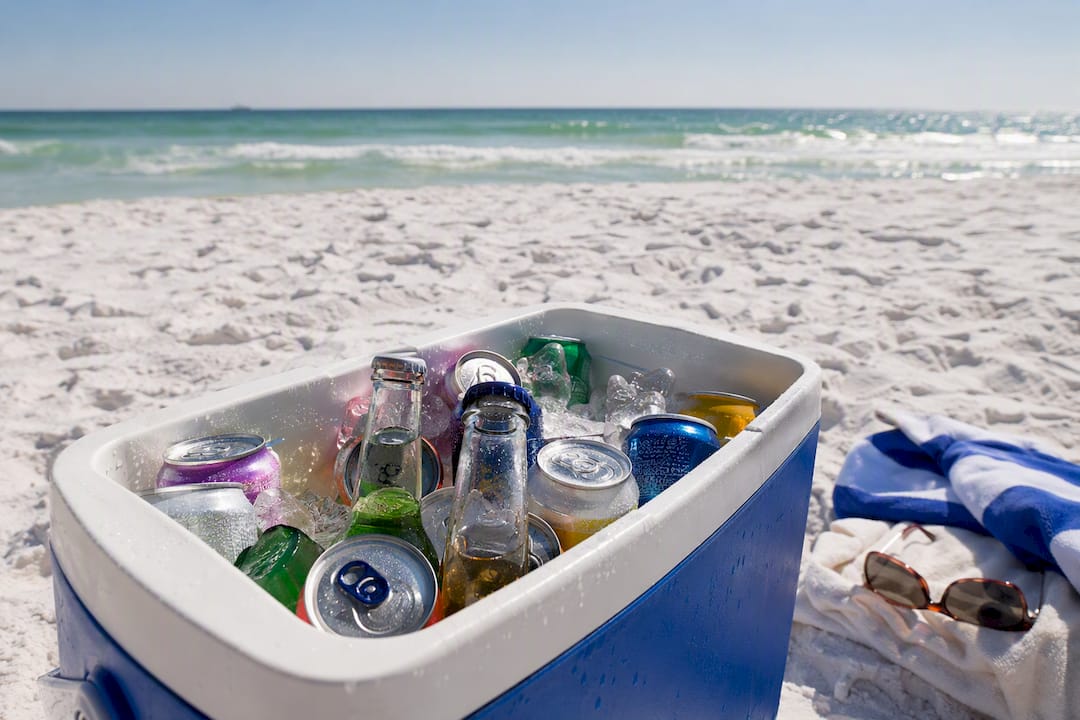
Yes, you can drink beer or wine on the sand at Panama City Beach most of the year if you’re 21 or older and carry a government-issued photo ID, but every March the city bans alcohol on the sandy Gulf beach entirely during March. Outside that month, the standing municipal code governs where and how you can drink. Before you pack the cooler, check the current administrative orders, since fines start at $500 per violation.
TL;DR:
Alcohol consumption on Panama City Beach is legally permitted outside March for those over 21 with a valid ID, but the entire beach shuts down alcohol use during March.
During March, possessing or drinking any alcohol on the sand is strictly prohibited, and fines for violations can exceed $500 per violation.
Administrative orders and temporary closures can extend alcohol restrictions and curfews beyond the official March ban, sometimes into April, so travelers must check current rules before going.
Bringing alcohol in coolers on the beach is allowed year-round, but during March, alcohol must be kept inside a locked vehicle or rental unit.
Booking a private rental can simplify compliance, as rules inside your property or balcony generally remain unaffected by seasonal restrictions or enforcement zones.
Table of Contents
-
What Happens If You Break Panama City Beach’s Alcohol Rules?
-
How Do You Check Current Panama City Beach Alcohol Rules Before Traveling?
-
Why the “Just Google It” Approach to Beach Alcohol Rules Fails
What Are the Standing Panama City Beach Alcohol Rules?
Outside of March, Panama City Beach lets adults enjoy a cold drink on the sand, but the city’s municipal code still draws firm lines around where and how. These year-round provisions form the backbone of every seasonal rule layered on top of them, and they apply whether you’re visiting over the Fourth of July or during a quiet October week.
Under the code, you’re allowed to possess and drink alcohol on the sandy Gulf beach only if you’re 21 or older and have a valid government-issued photo ID in your immediate possession showing your name, address, and age. Officers can ask to see it on the spot, and “I left it at the condo” doesn’t hold up. The city defines the “sandy Gulf beach” broadly: everything from the waterline back to the seaward edge of the nearest public road, including dunes and vegetated patches, which means the restriction follows the sand, not just the wet shoreline.
The code also restricts drinking in several other spots that trip up visitors:
-
Public rights-of-way, including sidewalks and street medians
-
Commercial and public parking lots
-
Certain designated public properties posted by the city
Penalties can stack. A citation for drinking without ID on the beach doesn’t cancel out a separate violation for an open container in a parking lot. The official visitor FAQ confirms the basic 21-and-up rule for most of the year, but the ordinance itself is the final word on specifics.
When Is Alcohol Banned on Panama City Beach in March?
Panama City Beach shuts down beach drinking entirely for one month a year, and it’s the single most important date to know before you book a spring trip. The municipal code sets the window at 12:01 a.m. on March 1 through 11:59 p.m. on March 31, and the city council can extend it by resolution if conditions call for it.
During that window, three things change:
-
Possessing or consuming any alcoholic beverage on the sandy Gulf beach becomes unlawful, period, regardless of age or ID.
-
Drinking alcohol in commercial parking lots near the beach is also prohibited.
-
Bars and package stores face restricted sales hours, with alcohol sales cut off at 2 a.m. in most areas instead of the later hours allowed the rest of the year.
The rule isn’t new; for travelers wondering about timing, it’s helpful to know when is spring break in the US to plan their visit and avoid the alcohol ban month. Local reporting notes the city adopted these spring-break measures roughly a decade ago after crowd-control problems during peak college break weeks, and it applies to everyone on the beach, residents and out-of-towners alike. If your Iowa spring break lands anywhere in March, plan your beach days around this ban rather than against it.
What Happens If You Break Panama City Beach’s Alcohol Rules?
Getting caught with an open beer on the wrong stretch of sand costs real money, not just a warning. The code sets a civil penalty per violation for unlawful possession or consumption, and that fine can apply on top of any other citation you’ve already picked up the same day.
Here’s how enforcement typically plays out:
-
Officers patrol beach access points and parking areas heavily during March and other peak weekends.
-
A citation is a civil matter you can contest in county court, similar to a traffic ticket.
-
Refusing to accept or sign a citation can escalate the situation toward a misdemeanor charge.
-
Outside high-traffic periods, officers sometimes issue verbal warnings first, but that leniency disappears once spring break crowds arrive.
The ordinance itself spells out the $500 figure directly, so don’t rely on secondhand accounts of “it’s just a slap on the wrist.” It isn’t, especially in March.
What Are High-Impact Periods and Juvenile Curfews?
Beyond the alcohol ban itself, the city layers on additional controls during what it calls High Impact Periods, which usually overlap with peak spring-break weeks. These get set through administrative orders that can change year to year, so the details matter more than the general idea.
Administrative Order 26-13 establishes a juvenile curfew for unaccompanied minors in designated zones, typically running from 8 p.m. to 5 a.m. Exceptions exist for minors accompanied by a responsible adult or those traveling directly to or from lawful employment.
Some practical details to know before you go:
-
High Impact Zones are mapped and kept on file at the City Clerk’s office, and they can shift from one spring-break season to the next.
-
Temporary overnight beach closures also occur, and some access points have stayed closed through April with typical closure windows around 10 p.m. to 4 a.m.
-
These closures and curfews don’t always end when the March alcohol ban does.
Pro Tip: If you’re bringing teenagers along, check the mapped High Impact Zone boundaries before choosing a rental. Booking just outside a designated zone can mean a much more relaxed evening for your family.
Can You Bring Coolers and Open Containers to the Beach?
Coolers themselves aren’t banned, but what’s inside them matters a lot depending on the date. Outside March, adults 21 and older can bring beer or wine onto the sandy Gulf beach as long as they carry ID. During March, the cooler can hold anything except alcohol if you’re heading onto the sand.
A few practical guidelines keep you on the right side of the rule:
-
Keep containers sealed and easy to identify until you’re clear of any commercial parking lot, where drinking is prohibited year-round.
-
Remember the “sandy Gulf beach” runs from the water back to the nearest public road, including dune areas, not just the section closest to the shoreline.
-
If you’re unsure whether you’re on public or private beach frontage, store alcohol inside your locked vehicle or your rental unit rather than testing the boundary.
Vehicle-based possession is treated differently than open consumption on the sand, so a sealed six-pack in your trunk isn’t the same violation as a cold one in your hand at the water’s edge.
How Do You Check Current Panama City Beach Alcohol Rules Before Traveling?
Rules here shift by season and sometimes by block, so don’t rely on last year’s spring-break memory. Confirm the current status through a few reliable channels before you finalize plans.
-
Check Chapter 3 of the Municode ordinance for the standing, year-round rules.
-
Review the city’s Document Center for active administrative orders, which list effective dates, mapped zones, and exceptions.
-
Scan recent local coverage from outlets like the News Herald for plain-language summaries of any changes.
-
Recheck within seven days of your trip and again on arrival, since expiration dates don’t always cover every related restriction.
If anything’s unclear, the city clerk’s office or the non-emergency police line can confirm whether a specific order still applies to your dates.
Local Context: Why These Rules Exist and How to Stay Safe
Panama City Beach stretches across more than 27 miles of sugar-white sand, and that scale draws enormous seasonal crowds, which is exactly why these rules exist in the first place. The busiest weeks concentrate enforcement, so choosing a rental outside a High Impact Zone and keeping drinks inside your unit rather than on the sand cuts your risk significantly.
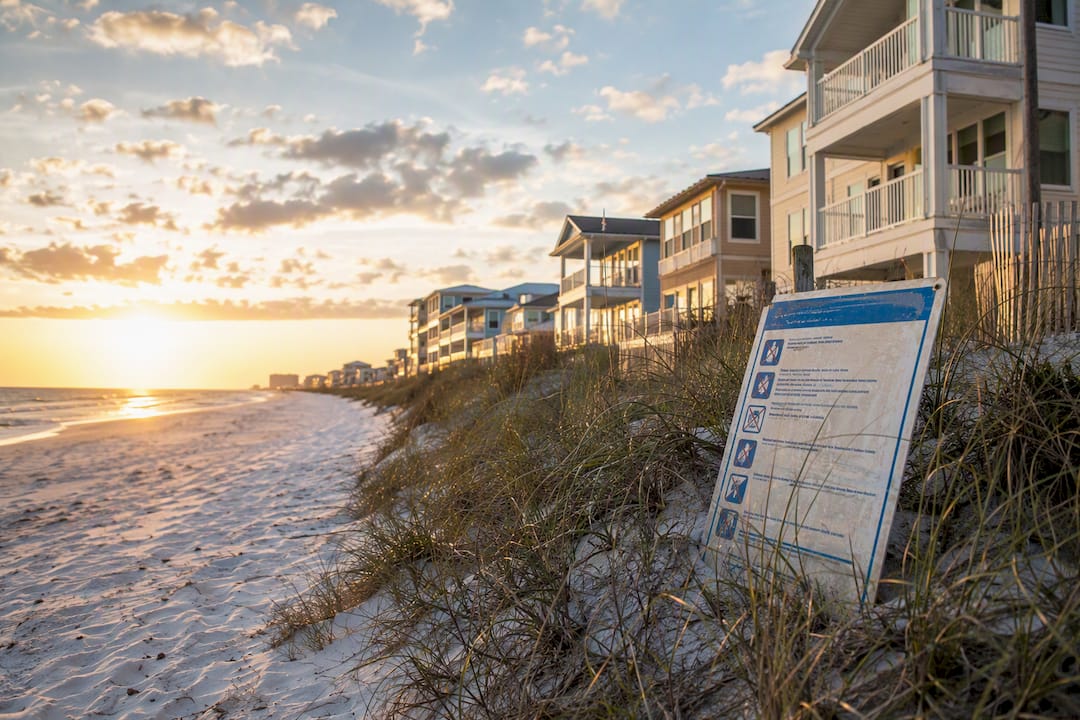
Pay attention to beach flag warnings for water safety, and if you’re planning evenings out, review nightlife hours ahead of time so curfews don’t catch you off guard. Timing your trip around seasonal crowd patterns also helps you avoid the heaviest enforcement stretches entirely.
Why the “Just Google It” Approach to Beach Alcohol Rules Fails
Most travelers treat Panama City Beach’s alcohol rules like a single yes-or-no fact, and that’s the mistake. The research here shows a layered system: a permissive baseline most of the year, a hard March shutoff, and a rotating set of administrative orders that can extend closures or curfews well past the calendar date everyone assumes is the finish line.
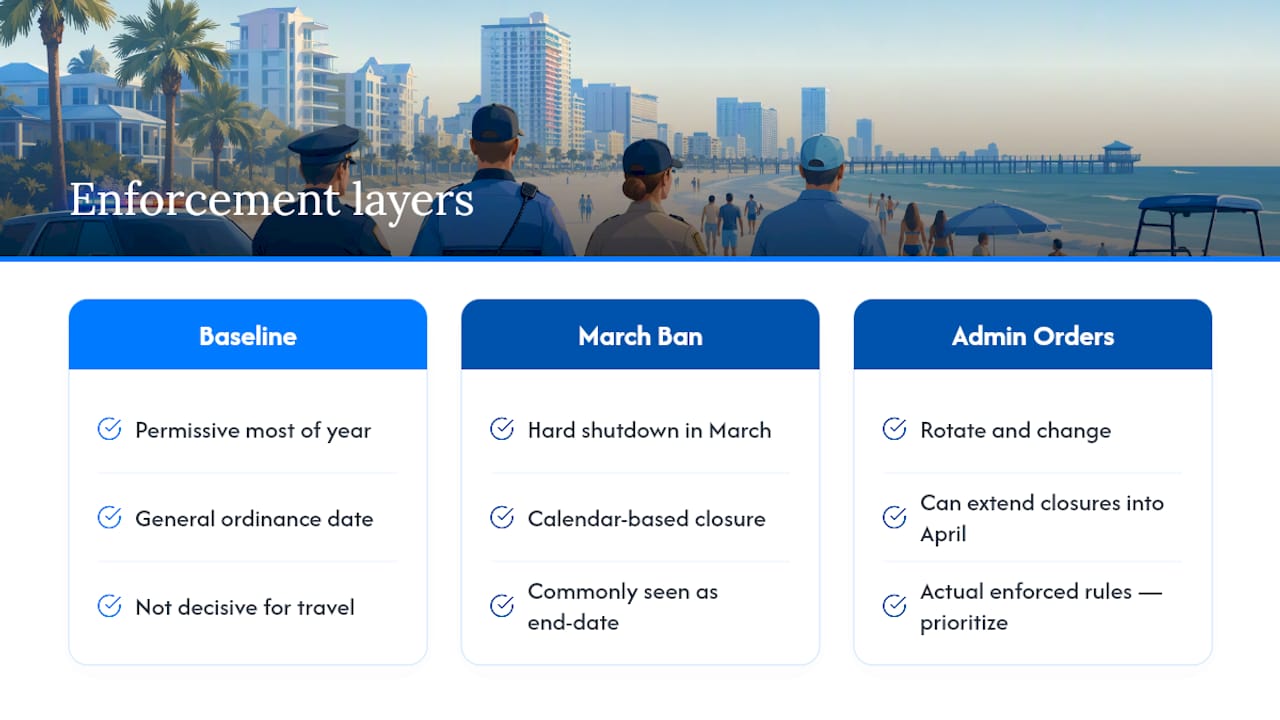
The conventional advice, “check if March is over,” misses the real risk. Temporary overnight closures and juvenile curfews have persisted into April in past seasons, meaning a family arriving April 5 assuming full normalcy could still walk into a curfew zone or a closed beach access point. That gap between the headline rule and the fine print is where most citations happen, not from people deliberately breaking the law.
If you take one thing from this guide, prioritize the administrative order over the ordinance date. The Municode chapter tells you the general rule; the current administrative order tells you what’s actually enforced on your travel dates. Readers heading down from Iowa for spring break should treat that document, not word of mouth, as the deciding factor.
— Joe
Book a Rental That Makes Compliance Easy
A private vacation rental solves most of these headaches before they start. Instead of guessing where the sandy Gulf beach boundary sits or whether your stretch of sand falls inside a High Impact Zone this week, you can enjoy a drink legally on your own balcony or in your unit, no ID checks or curfew maps required. Panamacitybeachflorida let you book directly with owners who know the current local rules and can flag anything unusual about your specific dates.
Every property comes with house rules worth a quick read, especially if you’re traveling during March or another high-impact stretch when nearby restrictions tighten. Browse available beachfront condos and homes now and lock in a stay that keeps your trip simple, private, and squarely on the right side of the rules.
Sources
-
Chapter 3 - ALCOHOLIC BEVERAGES | Code of Ordinances | Panama City Beach, FL | Municode Library
-
ADMINISTRATIVE ORDER 26-13 — Juvenile curfew during High Impact Periods
-
March’s beach alcohol ban expires in Panama City Beach — News Herald
-
Beach alcohol ban, curfew among new Panama City Beach spring break rules — WTVY
Recommended
About the Author
Joe Godar of the PanamaCityBeachFlorida.com Editorial Team creates destination guides, vacation-planning resources, and local travel content focused on Panama City Beach, Florida.
Our team researches local beaches, vacation rental trends, family activities, restaurants, attractions, events, and direct-booking best practices. Every guide is created to help travelers plan more confidently, experience the best of Panama City Beach, and avoid unnecessary third-party guest service fees.
PanamaCityBeachFlorida.com is part of the Emerald Coast by Owner marketing family, connecting travelers directly with verified vacation rental hosts throughout the Gulf Coast since 2016.
This article was reviewed for accuracy and updated using local destination research and current Panama City Beach vacation rental market insights.