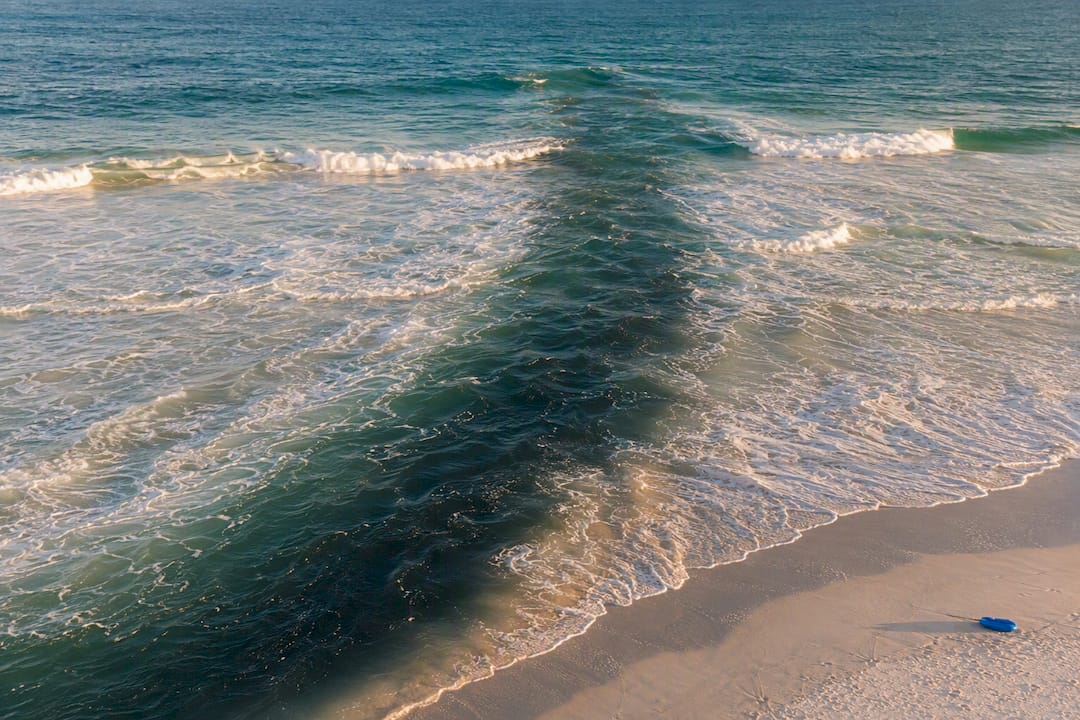
Rip currents are a real, year-round hazard at Panama City Beach, not just a rough-surf-day problem. The single most important habit you can build is simple: swim near a staffed lifeguard tower, check the flags before you touch the water, and if you ever feel the pull grab you, don’t fight it. Stay calm, float, and swim parallel to shore until the current lets go.
TL;DR:
- Rip currents form near piers, jetties, and gaps in sandbars, especially during low tide and when surf exceeds two feet, making conditions highly variable and unpredictable.
- Visual indicators such as streaks of foam, discolored water, or flat wave gaps help identify rip currents, but only from a vantage point above the shoreline.
- Swimmers caught in a rip should stay calm, float, and swim parallel to the shore until free, never trying to fight the current back directly to land.
- During double-red flag conditions, swimming is illegal and can result in a fine up to $500, emphasizing the importance of respecting posted flags and lifeguard guidance.
- Checking the National Weather Service forecast, observing the flag system, and swimming near staffed towers significantly reduce drowning risks in Panama City Beach.
Table of Contents
- What Is a Rip Current, and Why Is It So Dangerous?
- How to Spot a Rip Current at Panama City Beach
- What to Do if You Get Pulled Into a Rip Current
- Panama City Beach Flags, Local Rules, and the Double-Red Fine
- Where and When Rip Currents Form Along Panama City Beach
- Planning a Safer Beach Day: A Pre-Trip and On-Arrival Checklist
- What Local Officials and Safety Resources Say
- Where to Check Live Conditions and Official Guidance
- A Local Host’s Note for Indiana Visitors
- Sources
- FAQ
What Is a Rip Current, and Why Is It So Dangerous?
A rip current is a narrow, fast-moving channel of water that flows away from the beach, cutting straight through the surf zone like a river running out to sea. It forms where waves push water toward shore and that water needs somewhere to escape, so it funnels back out through a low spot in the sandbar.
Speed is the problem. Rip currents can move faster than a typical strong swimmer, which means even strong swimmers get exhausted trying to out muscle one. Here’s the part that surprises most visitors: rip currents don’t pull you under. They pull you out, away from shore, which is exactly why panicked swimmers who try to swim straight back to the beach burn through their energy fast and start to struggle. Panama City Beach’s wide, sandy shoreline and active Gulf surf make these channels a routine part of the water, not a rare event.
How to Spot a Rip Current at Panama City Beach
Rip currents don’t announce themselves with a warning sign, but they usually leave visual clues if you know where to look before you wade in.
- A gap or noticeably flatter patch of water in a line of otherwise breaking waves
- Foam, seaweed, or sediment drifting steadily out toward the Gulf in a streak
- A channel of water that looks murky, choppy, or discolored compared to the water around it
- A visible break in the sandbar pattern, especially near piers, groins, or jetties
Standing right at the water’s edge makes this much harder to see. Climb the dune walkover, check from a lifeguard stand, or scan from a pier before you commit to a spot. Local officials also point out that rip currents commonly cut through channels in the sandbar system near piers and jetties, so treat any calm-looking gap near those structures with extra suspicion.
Pro Tip: If you’re not sure whether a channel is a rip current, toss in a stick or a piece of seaweed and watch it for 30 seconds. If it drifts steadily seaward instead of rolling with the waves, you’ve found one.
None of this replaces a lifeguard’s trained eye or a real forecast. Visual checks are a good first filter, not a guarantee.
What to Do if You Get Pulled Into a Rip Current
Panic is what turns a rip current into a drowning. The current itself won’t pull you under water, but exhaustion from fighting it will.
- Stay calm and let yourself float. Don’t waste energy swimming against the pull.
- Swim parallel to the shoreline, not straight back toward the beach, until you feel the current release you.
- Once you’re out of the channel, angle back toward the sand at a diagonal.
- If you can’t escape, float on your back, wave an arm, and yell for attention.
- If you’re with a group, keep one person on the sand to call 911 or flag down a lifeguard, and throw a cooler lid, boogie board, or anything that floats to the swimmer instead of wading in yourself.
This is the same sequence Panama City Beach’s own guidance tells visitors to follow: remain calm, don’t fight the current, swim parallel until you’re free, then swim in at an angle.
Here’s why staying near a guarded area matters so much. According to the U.S. Lifesaving Association, the odds of drowning at a beach with lifeguards on duty are about 1 in 18 million. That statistic alone is worth building your whole beach day around.
Panama City Beach Flags, Local Rules, and the Double-Red Fine
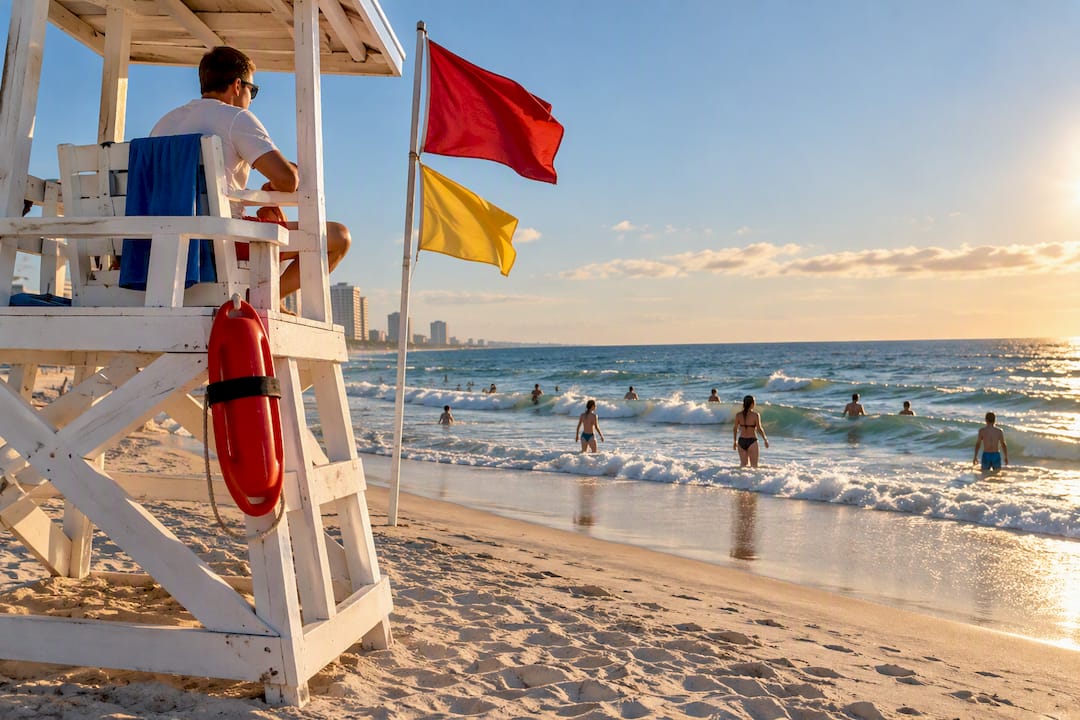
Panama City Beach runs on a color-coded flag system posted at every guarded beach access, and it pays to actually read it instead of walking past it.
- Green: Not used in Bay County. Its absence is intentional. Local officials want you exercising caution even on the calmest-looking days.
- Yellow: Moderate surf or currents. Caution advised.
- Single red: High hazard. High surf and strong currents.
- Double red: The water is legally closed to swimmers.
That last one carries real teeth. As of 2026, entering the Gulf during double-red-flag conditions is illegal in Panama City Beach and can bring a fine up to $500. This isn’t a suggestion posted for liability reasons. It’s a city ordinance, enforced.
Before you head to the sand, get in the habit of checking the flag status and swimming only near a staffed lifeguard tower. Panama City Beach’s flag color guide breaks down exactly what each color means so you’re not guessing on vacation.
Where and When Rip Currents Form Along Panama City Beach
Rip currents aren’t random. They form in predictable spots, even if exactly where shifts from week to week.
- Channels cut through gaps in the sandbar, where water pushed ashore by waves funnels back out
- Near piers, groins, and jetties, where hard structures interrupt the natural sand flow and create consistent rip zones
- Around low tide, when sandbar gaps are more exposed and currents tend to run stronger
- During periods of 2 to 3 foot or larger surf, when more water is being pushed ashore and needs to escape faster
Panama City Beach’s sand is famously fine and soft, which is part of what makes it beautiful. It’s also part of what makes rip currents unpredictable here. That loose sand shifts easily with every tide cycle, so a channel that wasn’t there last week can open up overnight.
Pro Tip: A flat, glassy-looking day is not a safe-water guarantee. Some of the most dangerous rip currents form on calm, sunny afternoons when swimmers let their guard down.
Planning a Safer Beach Day: A Pre-Trip and On-Arrival Checklist
A few minutes of prep before you leave the rental does more for your safety than anything you can do once you’re already in the water.
- Check the National Weather Service Surf Zone Forecast the morning of your beach day. A “low risk” rating doesn’t mean “no risk,” especially near piers and jetties.
- Pick a beach access point with a staffed lifeguard tower and note exactly where it is before anyone wades in.
- If you’re in a group, assign a spotter who stays on the sand watching swimmers, ready to call 911 or alert a lifeguard.
- Bring a flotation device for weaker swimmers and know where the nearest life ring station sits.
- If you’ve got small kids or nervous swimmers, consider skipping the Gulf on higher-risk days in favor of a rental with a private pool instead.
What Local Officials and Safety Resources Say
Panama City Beach Fire Rescue crews, who respond to Gulf rescues year-round, point to the same root cause again and again: the fine, loose sand along this stretch of coast shifts constantly, which lets rip channels open up in places that looked calm the day before. That’s part of why officials lean so hard on flags and lifeguard presence rather than “read the water yourself” advice alone.
A few resources worth bookmarking before your trip:
- Panamacitybeachflorida for a broader look at local hazards beyond rip currents
- The water temperature guide for swim planning by season
- Panama City Beach’s own rip current page, which lays out the city’s official escape guidance
Where to Check Live Conditions and Official Guidance
Check the NWS Surf Zone Forecast the morning of your trip, then confirm the day’s flag color on arrival through Panama City Beach’s own alert channels. The U.S. Lifesaving Association backs up why that combination works: lifeguarded beaches with informed swimmers are dramatically safer than unguarded stretches.
A Local Host’s Note for Indiana Visitors
Coming from Indiana, you probably don’t get many chances to read Gulf surf before your trip, and that’s exactly why the flags exist. Treat them the way you’d treat a posted speed limit: not a suggestion, a rule. Pick a spot near a staffed tower, and if you’ve got young kids or hesitant swimmers in the group, don’t feel like the Gulf is the only option. A rental with its own pool gives everyone a safe way to cool off on the days the flags say otherwise, and Panamacitybeachflorida can help you find one close to a guarded beach for the days conditions are right.
— Joe
Sources
- Rip currents — Panama City Beach official site
- U.S. Lifesaving Association lifeguard safety statistic — USLA
Recommended
- Panama City Beach Safety: What Illinois Travelers Should Know
- Panama City Beach Alcohol Rules: What’s Allowed and When
- Keep Your Panama City Beach Trip: 3 Trusted Checks for Red Tide Safety
- Panama City Beach Flag Colors: What Each One Means

About the Author
Joe Godar of the PanamaCityBeachFlorida.com Editorial Team creates destination guides, vacation-planning resources, and local travel content focused on Panama City Beach, Florida.
Our team researches local beaches, vacation rental trends, family activities, restaurants, attractions, events, and direct-booking best practices. Every guide is created to help travelers plan more confidently, experience the best of Panama City Beach, and avoid unnecessary third-party guest service fees.
PanamaCityBeachFlorida.com is part of the Emerald Coast by Owner marketing family, connecting travelers directly with verified vacation rental hosts throughout the Gulf Coast since 2016.
This article was reviewed for accuracy and updated using local destination research and current Panama City Beach vacation rental market insights.